For centuries, the image of the tarot reader has been cloaked in velvet and shadows—a mystical figure gazing into the flickering candlelight, predicting impending doom or sudden fortune. Yet, as we navigate an increasingly complex modern world, the tarot has experienced a profound renaissance. Today, you are just as likely to find a deck of seventy-eight vividly illustrated cards on the desk of a clinical psychologist or a corporate executive as you are in a metaphysical boutique.
This shift is not a mere trend; it is a recognition of the tarot’s profound utility as a psychological tool. Many practitioners believe that the true magic of the cards lies not in their ability to predict the future, but in their capacity to illuminate the present. By bridging ancient symbolism with modern psychology, tarot offers a structured, elegant method for self-inquiry.
Whether you are a seasoned mystic or a skeptical observer, understanding the psychological mechanisms behind tarot—specifically the concepts of archetypes and projection—reveals exactly why these cards are so effective at helping us unravel the tangled threads of our own minds.
The Lexicon of the Unconscious: Carl Jung and Archetypes
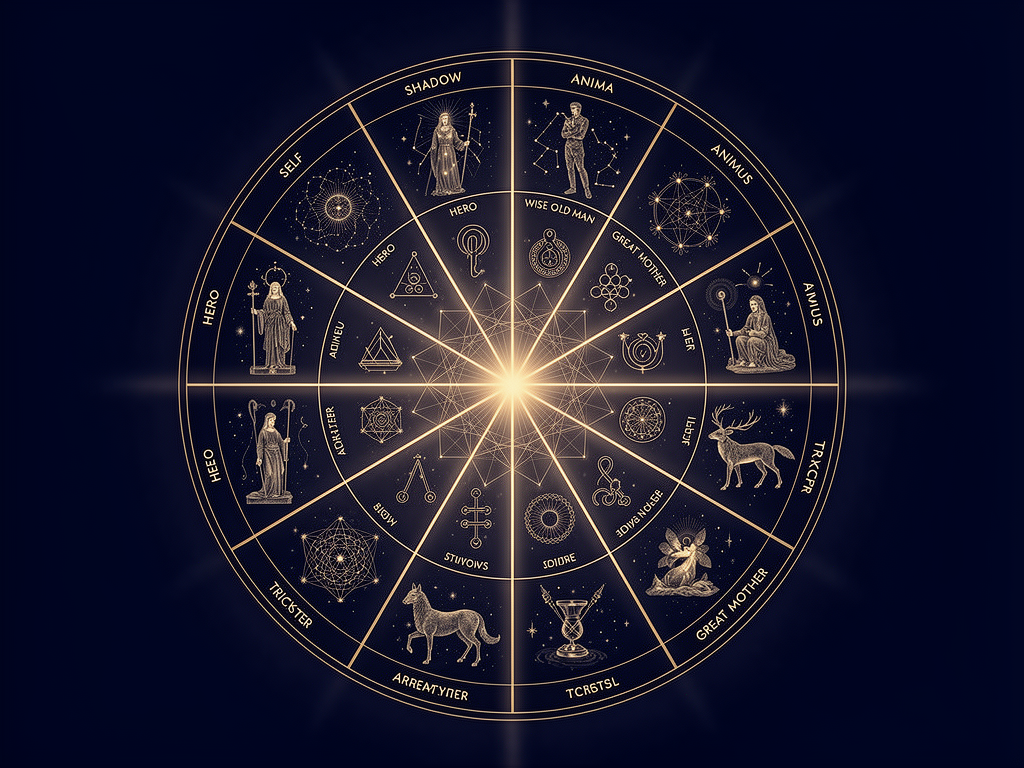
To understand the psychology of tarot, we must first look to the pioneering work of Swiss psychiatrist Carl Jung. Jung proposed the existence of the "collective unconscious"—a deep, shared layer of the human psyche that houses universal experiences, instincts, and symbols. He called these universal symbols "archetypes."
Archetypes are the recurring characters and themes that appear in the myths, fairy tales, and religious traditions of cultures across the globe, completely independent of one another. The Wise Old Man, The Great Mother, The Hero, The Trickster—these are not just literary devices; they are fundamental blueprints of human experience.
The tarot, particularly the twenty-two cards of the Major Arcana, is essentially a bound volume of these archetypes. When you draw The Fool, you are encountering the universal archetype of new beginnings, innocence, and the leap of faith required to start a new journey. When you draw The Hermit, you are engaging with the archetype of introspection, solitude, and inner wisdom.
Jung himself recognized the psychological value of these images. He observed that the tarot cards represent the archetypes of transformation, mapping out the journey of individuation—the lifelong process of becoming a complete, integrated person. Just as astrological tradition suggests that planetary movements reflect inner psychological shifts, many practitioners believe that tarot cards offer a similar macrocosm-microcosm mirror, capturing the essence of our current emotional landscape.
When we lay out the cards, we are not consulting external spirits; we are conversing with the deepest, most ancient parts of ourselves using a visual language that our subconscious inherently understands.
The Mirror of the Mind: The Power of Psychological Projection
If archetypes provide the vocabulary of tarot, psychological projection is the grammar that brings the reading to life.
In psychology, projection is a defense mechanism wherein humans attribute their own unconscious thoughts, feelings, or motives to an external object or person. While projection can sometimes cause interpersonal conflict (such as accusing a partner of being angry when, in fact, you are the angry one), it can also be harnessed as a powerful tool for self-discovery.
Consider the famous Rorschach inkblot test. The inkblot itself is entirely meaningless—just a random splatter of black on white paper. However, when a patient is asked what they see, their answer reveals their internal state. The ambiguity of the image forces the mind to construct meaning, and the mind can only construct meaning using the materials it currently holds.
Tarot functions in much the same way, albeit with much richer, more evocative imagery. The cards are intentionally layered with ambiguous, complex symbols. When you pull the Three of Swords—a card typically depicting a heart pierced by three blades against a stormy sky—the card itself possesses no inherent emotional pain. It is just ink on cardstock.
However, the moment you look at it, your mind instantaneously projects its own narrative onto the image. One person might see the pain of a recent breakup. Another might see the grief of a lost career opportunity. A third might see the necessity of a painful surgical procedure. The card acts as a polished mirror, reflecting whatever hidden fears, desires, or truths are currently swirling in your subconscious. This practice is designed to bypass the ego's defenses, allowing you to confront realities you might otherwise avoid.
Bypassing the Rational Mind and the Inner Critic
One of the greatest challenges in modern self-reflection is the dominance of the rational, analytical mind. We are conditioned to think our way out of problems, to create pros and cons lists, and to intellectualize our feelings. While this is useful for managing a budget or planning a schedule, it is often a hindrance when trying to understand our emotional depths.
The rational mind is heavily guarded by the "inner critic"—that voice that tells us our feelings are invalid, our dreams are foolish, or our fears are unfounded. When we try to sit down and simply think about our problems, the inner critic often censors our most vulnerable truths before they can reach our conscious awareness.
Tarot effectively bypasses this intellectual censorship. Because tarot communicates through imagery, metaphor, and symbol, it speaks directly to the right hemisphere of the brain—the center of intuition, creativity, and emotion. By engaging with a visual story rather than a verbal argument, we drop our intellectual defenses. We stop trying to "solve" the problem and instead allow ourselves to "feel" the narrative.
This is why a tarot reading can often provoke a sudden, visceral "aha!" moment. The truth was always there, buried in the subconscious; the card simply provided the key to unlock a door the rational mind was desperately trying to keep shut.
Narrative Therapy: Becoming the Author of Your Life
Humans are inherently meaning-making machines. We understand our lives through stories. When we experience trauma, confusion, or stagnation, it is often because our personal narrative has become fractured or chaotic. We lose the plot.
In clinical psychology, Narrative Therapy is an approach that centers people as the experts of their own lives, encouraging them to separate themselves from their problems and rewrite their personal stories in a more empowering way.
Tarot is a profound, accessible form of self-guided narrative therapy. When you lay down a spread of cards—perhaps representing the past, the present, and the potential future—you are instantly tasked with weaving those disparate images into a cohesive story. You are forced to look at the conflicts, the antagonists, the hidden resources, and the climax of your current situation.
By externalizing your problems onto the table, you gain critical distance. You are no longer drowning in your circumstances; you are hovering above them, observing the plotline. This shift in perspective restores a profound sense of agency. You begin to see that if you are the storyteller, you also have the power to turn the page and change the ending.
A Grounded Approach: How to Read Tarot Psychologically
If you are interested in utilizing tarot as an instrument for psychological self-reflection rather than divination, the approach requires a slight shift in perspective. You do not need to memorize arcane esoteric texts or possess psychic abilities. You simply need a willingness to be honest with yourself.
Here are practical steps to integrate tarot into your self-care and mental wellness routine:
1. Reframe the Question
The quality of your reading depends entirely on the quality of your question. Avoid asking the deck absolute, predictive, or yes/no questions (e.g., "Will I get the job?" or "Does my partner love me?"). Remember, the cards cannot make absolute predictions.
Instead, ask open-ended, empowering questions focused on self-discovery.
- Instead of: "Will I be successful?"
- Ask: "What hidden strengths can I leverage to reach my goals?"
- Instead of: "What will happen in my relationship?"
- Ask: "What dynamic am I bringing to this relationship that I am currently blind to?"
2. The Intuitive Draw
Shuffle the cards while focusing deeply on your question. Do not rush this process; let it be a moment of mindfulness. When you feel ready, draw a card. Trust that whichever card you pull is the exact mirror you need to look into at this moment.
3. Observe Before You Interpret
Resist the urge to immediately reach for the guidebook to look up the "official" meaning of the card. Remember the principle of projection. Look at the imagery. What catches your eye first? Is it the color of the sky? The expression on a figure's face? A tiny symbol in the background?
Ask yourself: How does this card make me feel? Does it evoke anxiety, peace, resistance, or longing? Your initial, visceral reaction is the most important part of the reading. It is your subconscious speaking before your rational mind can interrupt.
4. Integrate with Journaling
Once you have observed your own reactions, you may consult a guidebook to explore the traditional archetypal meanings. Notice how the traditional meaning overlaps with your personal projection. Finally, write down your insights. Journaling solidifies the abstract feelings into concrete realizations, allowing you to take actionable steps in your waking life.
The Sacred and the Secular
We live in an era that is highly rational, yet deeply starved for meaning. We crave rituals that connect us to something larger than ourselves, but many of us struggle to find that connection in traditional dogmas.
Tarot offers a beautiful middle path—a secular-sacred practice. It allows us to engage with the numinous, the mysterious, and the poetic, without requiring us to abandon our critical thinking or scientific understanding.
The cards are just paper and ink. They hold no power to dictate your fate. But as mirrors for the mind, as lexicons of the soul's archetypes, they hold the profound power to help you understand yourself. And in the journey of human life, self-understanding is the truest form of magic there is.
Actionable Practice: The Jungian Reflection Spread
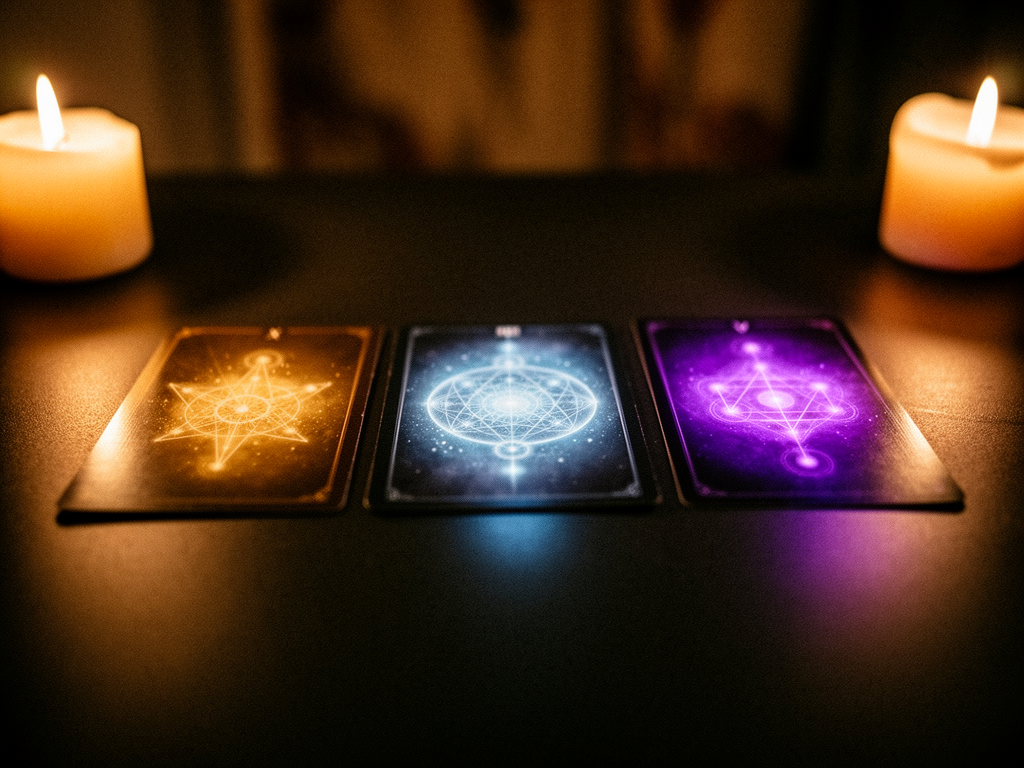
Tonight, or whenever you have a quiet moment, try this grounded, three-card psychological spread. Shuffle your deck, take three deep, grounding breaths, and pull three cards, placing them in a row from left to right.
- Card 1: The Persona (Left): How am I currently presenting myself to the world in this situation? What mask am I wearing?
- Card 2: The Shadow (Center): What hidden fear, desire, or truth am I currently repressing or ignoring?
- Card 3: The Integration (Right): What practical action can I take to integrate this shadow and move forward with greater wholeness?
Spend ten minutes journaling on the narrative these three cards create. You may be surprised by the wisdom your own mind reveals.