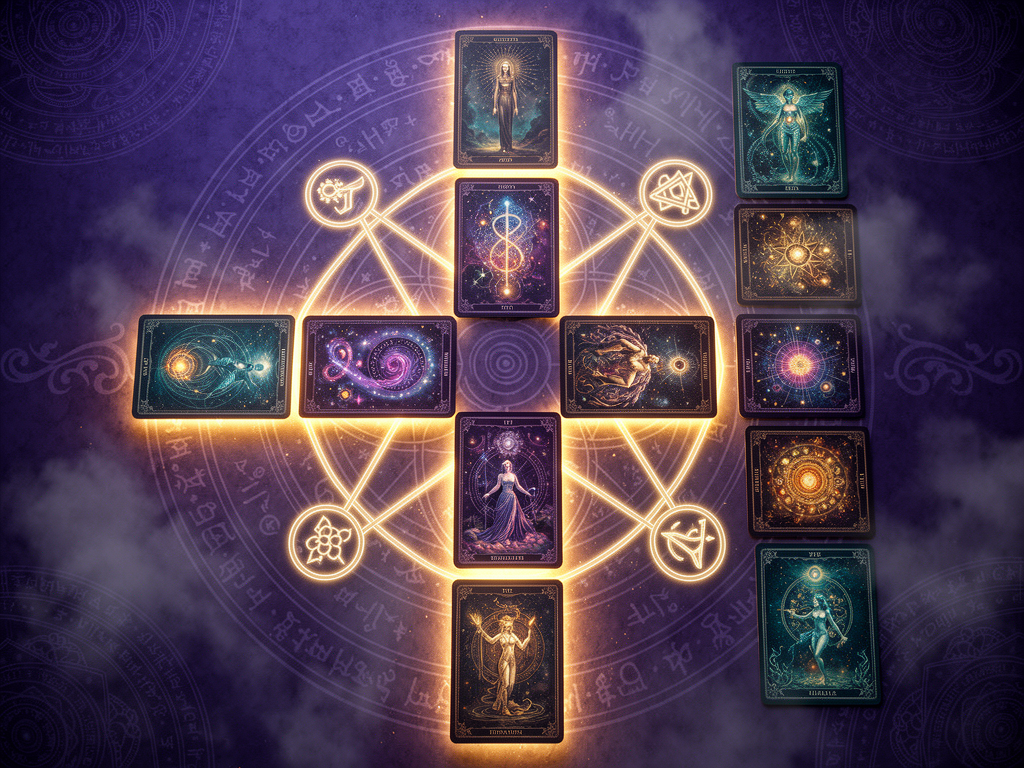
The Allure and the Limitation of the Little White Book
When you first hold a new tarot deck, the experience is undeniably tactile and deeply resonant. The weight of the cards, the vividness of the artwork, and the quiet promise of ancient wisdom all invite you into a space of reflection. Yet, for many beginners, this initial awe is quickly followed by a sense of academic anxiety. You draw a card, gaze at its complex imagery, and immediately reach for the "little white book"—the guidebook included with the deck—to tell you what the card means.
There is absolutely nothing wrong with studying traditional meanings. In fact, understanding the foundational definitions of the cards is a vital part of the journey. The structure of the tarot, with its Major and Minor Arcana, its suits, and its numerology, provides a rich, shared vocabulary. However, many practitioners believe that the book is merely the starting point. It offers the vocabulary, but your intuition is what writes the poetry.
If you rely solely on memorized keywords, a tarot reading can feel rigid, disjointed, or confusingly contradictory. The true magic of the tarot unfolds when you learn to bridge the gap between the conscious mind's desire for rules and the subconscious mind's fluid, symbolic language. This is the art of intuitive reading.
Understanding the Archetypal Mirror
To trust your intuition, it helps to understand why the tarot is such an effective tool for accessing it. The images on the cards are not random; they are steeped in archetypes—universal symbols and themes that resonate across human cultures and histories. Modern psychological understanding, drawing heavily from figures like Carl Jung, suggests that these archetypes speak directly to our collective unconscious.
When you look at the Empress, you are not just looking at a woman in a garden; you are engaging with the universal concept of nurturing, abundance, and the genesis of life. When you pull the Hermit, you are confronting the timeless human need for introspection and solitary seeking.
Because these images bypass the logical brain and speak directly to the subconscious, your initial, unfiltered reaction to a card is incredibly valuable. Your intuition is the quiet voice of your subconscious translating these ancient symbols into a message relevant to your present moment.
What Does Intuition Actually Feel Like?
A common misconception is that intuition must arrive as a booming, cinematic voice from the heavens or a sudden, psychic vision. For most people, intuition is far subtler. It is a gentle nudge, a quiet knowing, or a physical sensation. Learning to trust what you feel requires you to first identify how your unique intuition communicates with you.
The Somatic Response
Our bodies often process intuitive information long before our logical minds can articulate it. When you turn over a card, pay attention to your physical body. Does your chest tighten? Do your shoulders drop in relief? Does your breath hitch, or do you feel a sudden rush of warmth? For example, traditional meanings might suggest the Ten of Swords is a card of painful endings. But if you pull it and experience a profound, physical sense of relief, your intuition is telling you that this ending—however dramatic—is deeply necessary and ultimately liberating.
The Visual Pull
Tarot artwork is intentionally dense. In any given reading, your eye might be drawn to a specific detail that you have never noticed before. Perhaps you pull the Two of Wands, but instead of focusing on the man holding the globe, your eyes lock onto the small, blooming roses in the corner of the card. Your intuition is using that specific symbol to highlight a theme of organic growth or blooming potential in your situation. Trust the pull.
The Memory Flash
Sometimes, a card will instantly trigger a memory. The King of Pentacles might suddenly remind you of your grandfather's garden, or the Three of Cups might bring up a memory of a specific conversation you had with a friend years ago. These flashes are not distractions; they are your intuition drawing a parallel between the energy of the past and the reality of the present.
Moving Beyond the Book: Steps to Awaken Intuitive Reading
Transitioning from a strictly traditional reader to an intuitive one is a practice of unlearning as much as it is learning. It requires patience and a willingness to be imperfect. Here are several ways to cultivate that trust.
Step 1: The Visual Dive
Before you consult any guidebook, spend at least one full minute simply looking at the card. Imagine you are stepping into the landscape of the image. What is the weather like? What sounds do you hear? What is the mood of the figures depicted? If the figure in the card could speak to you, what would they say? By engaging with the card as a living scene rather than a static flashcard, you invite your imagination to lead the way. Imagination is the doorway to intuition.
Step 2: Cultivating Personal Associations
Traditional meanings are a collective agreement, but your personal associations are your private dialect. If the traditional meaning of a dog in a tarot card represents loyalty, but you have a severe phobia of dogs, that symbol will mean something entirely different to you. Honor your personal lexicon. Keep a journal where you record your unique associations with specific cards. Over time, this personal grimoire will become far more accurate for your readings than any published guidebook.
Step 3: Speaking the Narrative Aloud
When reading multiple cards, the magic lies in the space between them. Instead of reading each card in isolation (e.g., "This card means X, and this card means Y"), try to tell a story. How does the figure in the first card react to the figure in the second? Is the energy flowing smoothly from left to right, or is there a block? Speaking the story aloud bypasses the inner critic that wants to ensure you are getting the meanings "right." As you speak, you will often find words tumbling out of your mouth that surprise you—this is your intuition taking the wheel.
The Dance Between Tradition and Intuition
Embracing intuition does not mean discarding tradition entirely. The most profound readings occur when ancient wisdom and personal intuition dance together. Astrological tradition suggests that certain cards are linked to specific planets and elements, which provides a beautiful, structural framework. Intuition is the color that fills in that framework.
When traditional meanings clash with your gut feeling, it can be confusing. Imagine pulling the Sun—traditionally a card of radiant joy and success—but feeling a deep sense of exhaustion or burnout. Instead of dismissing your feeling, ask how the two can coexist. Perhaps the card is warning you that you are flying too close to the sun, or that your relentless pursuit of "positivity" is actually draining you. The friction between the book and your gut is often where the deepest insights are hidden.
Overcoming the Fear of Being "Wrong"
The single greatest block to intuitive reading is the fear of making a mistake. We are conditioned by modern education to believe that every question has one correct answer, and if we don't know it, we are wrong. Tarot does not operate in the realm of absolute facts; it operates in the realm of resonance and reflection.
When you read for yourself or others, remember that you are not predicting a fixed, unchangeable future. Many practitioners believe that tarot reflects the current energetic trajectory—a map of where things are heading based on present circumstances. Because the future is malleable, there is no "wrong" reading, only a reading that either resonates or doesn't. If an intuitive hit doesn't make logical sense immediately, let it breathe. Often, the meaning of an intuitive insight reveals itself days or even weeks after the reading.
Furthermore, release the pressure to be profound. Sometimes, the message of a card is incredibly mundane. The Page of Cups might not be heralding a grand spiritual awakening; it might just be gently suggesting you drink a glass of water and take a nap. Trusting your intuition means trusting the simple messages just as much as the complex ones.
Cultivating a Lifestyle of Trust
Trusting your intuition with the tarot cards is ultimately a reflection of trusting your intuition in your daily life. The cards are simply pieces of paper with ink on them; the magic is entirely within you.
To strengthen this inner knowing, begin noticing your intuitive responses when you aren't holding the deck. Notice the gut feeling you get when you walk into a new room. Pay attention to the sudden urge to take a different route home. Acknowledge the subtle shifts in your energy when you interact with different people. As you validate your intuition in the mundane moments of life, it will inherently grow louder and clearer when you sit down at your reading table.
Remember that developing this skill is a lifelong practice. There will be days when the cards feel silent, and you have to lean heavily on the guidebook. That is perfectly fine. The goal is not to achieve a state of psychic perfection, but to build a relationship of deep, abiding trust with your own inner wisdom.
Actionable Practice: The Three-Breath Card Pull
To begin bridging the gap between intellect and intuition, try this practice designed to center your body and silence your inner critic.
- Shuffle your deck while holding a simple, open question in your mind, such as: "What energy do I need to be aware of today?"
- Pull a single card and place it face up before you. Do not reach for the guidebook.
- Before you attempt to analyze the card, take three deep, slow breaths.
- Breath One: Focus entirely on your physical body. Notice any immediate tension, lightness, warmth, or coldness.
- Breath Two: Let your eyes wander softly over the card. Notice the very first detail, color, or symbol your eye is naturally drawn to, regardless of its traditional importance.
- Breath Three: Ask yourself, "If this card had only one word to say to me right now, what would it be?" Trust the very first word that pops into your mind, even if it seems entirely unrelated to the card's traditional meaning.
Write down your physical sensation, the visual detail, and the single word in a journal. Carry these intuitive fragments with you throughout your day, allowing them to unfold and reveal their deeper meaning on their own time.