The Allure of the Triad: Why Three Cards?
For centuries, the tarot has captivated the spiritually curious, serving as a repository of archetypal imagery and ancient wisdom. While popular culture often portrays tarot as a tool for fortune-telling, many practitioners believe its true power lies in its ability to act as a mirror for the soul. It is a reflective surface that reveals the unseen currents of our subconscious, helping us navigate the complexities of modern life with greater grace and clarity.
When beginning a daily tarot practice, it is easy to become overwhelmed by complex, ten-card layouts like the Celtic Cross. However, profound insight rarely requires complication. The three-card spread is perhaps the most elegant and versatile tool in a practitioner's repertoire.
The power of three is deeply embedded in human consciousness. It represents the foundational structure of storytelling (beginning, middle, and end), the architecture of time (past, present, and future), and the holistic nature of our being (mind, body, and spirit). In just five minutes, drawing three cards can shift your perspective, ground your energy, and offer deeply meaningful daily reflection.
Setting the Sacred Space
Before drawing your cards, it is essential to transition from the noise of the external world into a state of internal receptivity. This does not require an elaborate altar or hours of meditation, but rather a deliberate moment of pause.
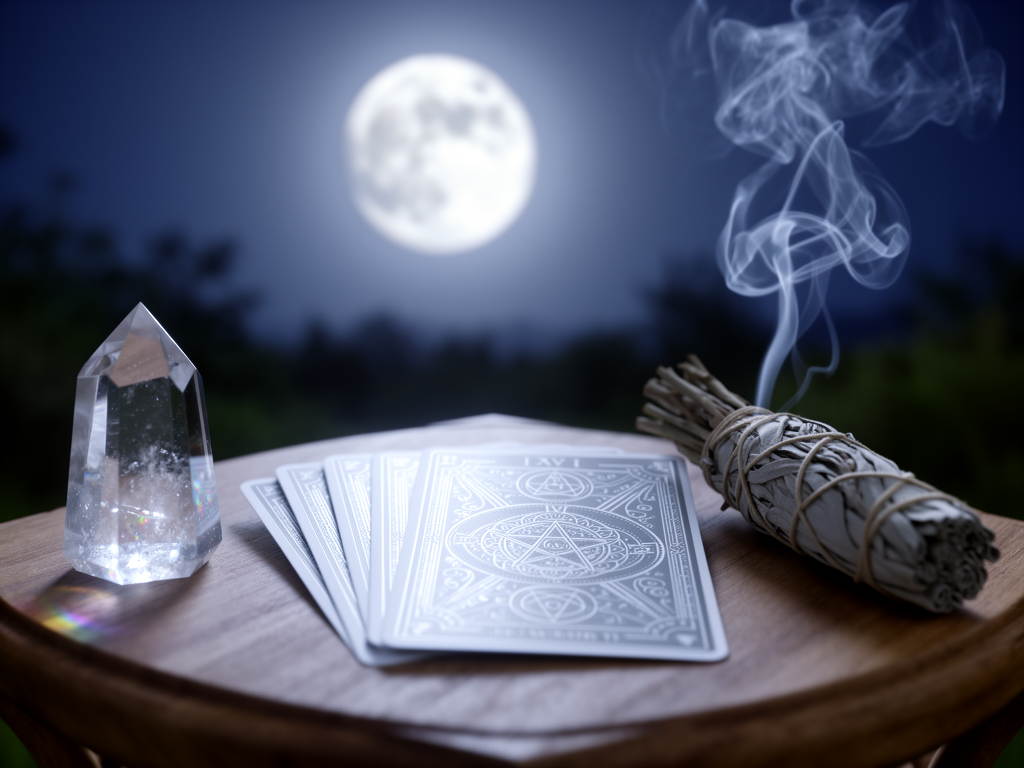
This practice is designed to regulate your nervous system and clear the mental static that so often clouds our intuition. Find a quiet space where you will not be disturbed. You might choose to light a candle, burn a piece of palo santo, or simply place your hands over your heart.
Take three deep, grounding breaths. With each inhalation, draw in clarity; with each exhalation, release any lingering tension or preconceived expectations about what the cards might say. Remember that the tarot does not dictate your fate; rather, it offers a symbolic vocabulary to help you understand your own inner landscape.
The Art of the Shuffle and the Inquiry
The physical act of shuffling the deck is a vital part of the ritual. As you mix the cards, you are metaphorically mixing the endless possibilities of the day ahead. Let your hands move intuitively. Some prefer the traditional overhand shuffle, while others prefer to fan the cards out across a table and select them one by one. There is no wrong way to handle your deck, provided it is done with respect and intention.
As you shuffle, formulate your inquiry. The quality of your answer is inherently linked to the quality of your question. Avoid yes-or-no questions, as they limit the nuanced wisdom the cards can provide. Instead, ask open-ended questions that empower you.
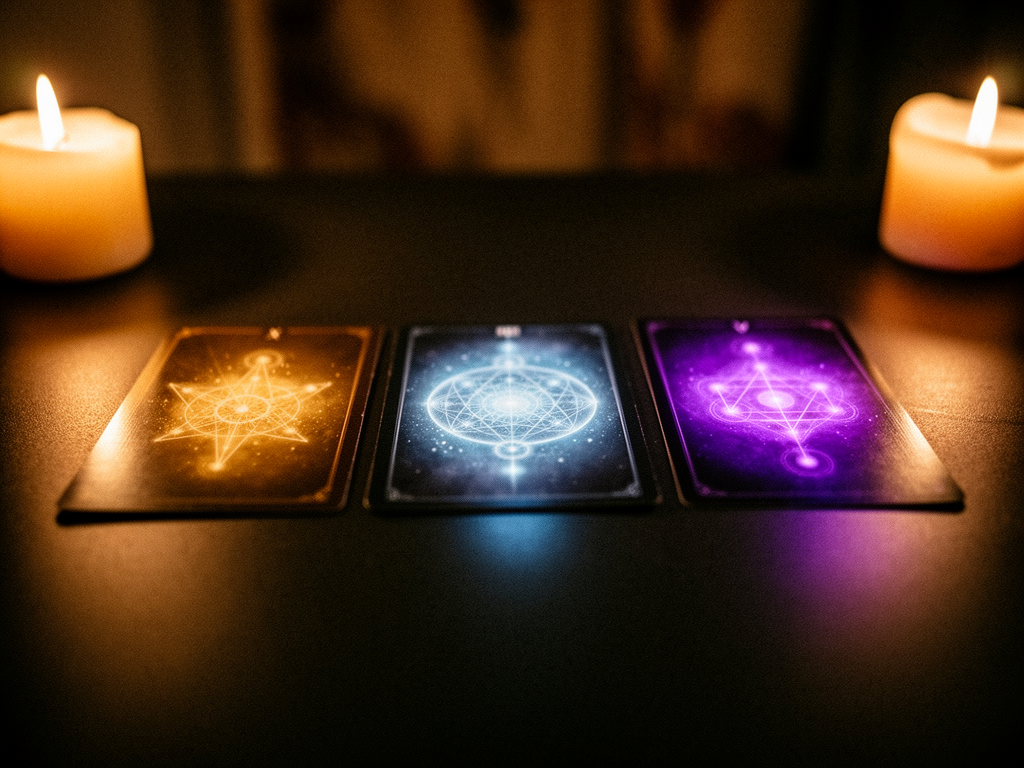
Instead of asking, 'Will I have a good day?' you might ask, 'What energy do I need to embody to navigate today's challenges?' or 'What is the underlying theme of my current situation?' Once you feel a sense of completion—a subtle intuitive nudge—stop shuffling, cut the deck, and draw your three cards, laying them out from left to right.
Spread 1: Past, Present, Future
The Past, Present, Future spread is the most traditional of all three-card layouts. It provides a narrative arc, helping you understand how historical influences are shaping your current reality, and where your current trajectory may lead.
Position 1: The Past
In this context, the 'Past' does not necessarily refer to ancient history. It often points to the recent past—perhaps a conversation from yesterday, a lingering emotion from the weekend, or a foundational belief that is currently influencing your mindset. It is the energy you are carrying into the present moment.
Position 2: The Present
This card represents the 'now.' It is the focal point of the reading, illuminating your current state of being, the core of the issue at hand, or the primary energy available to you today. Pay close attention to this card, as it is the pivot point upon which your choices rest.
Position 3: The Future
It is crucial to understand that this card does not represent an unchangeable fate. Never make absolute predictions based on a tarot reading. Instead, view the 'Future' card as the likely outcome if you continue on your current path. It is a trajectory. If you do not like the energy of the future card, the reading has successfully done its job: it has given you the awareness needed to change your present actions and, consequently, alter your future.
Spread 2: Situation, Action, Outcome
When you are facing a specific dilemma or need practical, actionable advice for the day, the Situation, Action, Outcome spread is unparalleled. It cuts through emotional fog and offers pragmatic guidance.
Position 1: The Situation
This card provides an objective snapshot of your current circumstances. It strips away your personal biases and anxieties, showing you the reality of the matter as it stands. It often validates what you already intuitively know but may be hesitant to acknowledge.
Position 2: The Action
This is the most empowering card in the spread. It advises you on the best course of action to take. It might suggest asserting your boundaries (like the Queen of Swords), taking a leap of faith (like The Fool), or simply resting and retreating (like the Four of Swords). It is the card of personal agency.
Position 3: The Outcome
Similar to the Future card in the previous spread, the Outcome reveals the potential result of taking the advised Action. It shows the harmony or resolution that can be achieved if you step into the energy suggested by the second card.
Spread 3: Mind, Body, Spirit
For a holistic daily check-in, particularly effective as a morning routine, the Mind, Body, Spirit spread offers profound personal insight. This layout is less about external events and entirely focused on your internal ecosystem.
Position 1: The Mind
This card reflects your current mental state. It highlights your thoughts, anxieties, intellectual pursuits, and the stories you are telling yourself. If a chaotic card appears here, it may be a gentle invitation to practice mindfulness or limit your screen time for the day.
Position 2: The Body
This card speaks to your physical vessel and your material reality. It might indicate your energy levels, your need for movement, or your connection to the physical world. (Note: Never use the tarot to make medical claims or diagnose physical ailments. View this card as a reflection of your general vitality and groundedness.)
Position 3: The Spirit
This card illuminates your higher self, your intuition, and your deeper emotional landscape. It points to the spiritual lesson of the day or the soul-level growth that is currently unfolding beneath the surface of your everyday life.
The Art of Synthesis: Reading the Cards Together
While understanding the individual meaning of each card is important, the true magic of the tarot reveals itself in the synthesis. A three-card spread is not three isolated statements; it is a conversation between the cards.
Look for patterns and recurring themes. Are the cards predominantly Major Arcana? This suggests that the day holds significant, overarching life lessons or shifts in perspective. Are they mostly Minor Arcana? The focus is likely on the day-to-day, practical matters of human experience.
Furthermore, observe the elemental balance. Astrological tradition suggests that the four suits of the tarot correspond to the four classical elements: Wands (Fire/Action), Cups (Water/Emotion), Swords (Air/Intellect), and Pentacles (Earth/Material).
If your spread is heavy with Cups, your day will likely be driven by emotional connections and intuition. A spread dominated by Swords suggests a day of mental clarity, communication, or perhaps conflict. Recognizing these elemental signatures allows you to grasp the overall 'weather' of your day at a single glance.
Navigating Challenging Imagery
Inevitably, your daily draws will occasionally feature cards with intimidating imagery, such as The Tower, Death, or the Ten of Swords. It is entirely natural to feel a flutter of anxiety when these archetypes appear. However, it is vital to approach them with curiosity rather than fear.
In the psychological framework of the tarot, Death rarely signifies literal passing; rather, it speaks to profound transformation, the shedding of old skins, and the necessary end of a cycle to make way for the new. The Tower, while disruptive, represents the dismantling of false structures and the revelation of sudden truth.
When these cards appear in your daily three-card spread, they are not predicting disaster. They are inviting you to embrace change, release what no longer serves you, and find liberation in the breakdown of limiting beliefs. They are the fierce, transformative teachers of the deck.
A Daily Practice Prompt
Establishing a daily tarot practice is a commitment to your own inner growth. It is a few minutes carved out of the morning rush to say, 'I am listening.'
Tomorrow morning, before checking your phone or reading the news, try this actionable practice:
- Prepare your space, take three deep breaths, and shuffle your deck.
- Ask the cards: 'What do I need to know to move through today with intention and grace?'
- Draw three cards using the Mind, Body, Spirit layout.
- Take a journal and write down just one sentence for each card. Do not overthink the traditional definitions; write down the first intuitive hit or feeling that the imagery evokes.
- Finally, write a single 'Theme of the Day' based on the synthesis of the three cards. Carry this theme with you as a gentle, guiding light as you step out into the world.