For millennia, humanity has looked to the night sky not just for navigation, but for an understanding of the self. Long before the advent of artificial lighting and digital calendars, our ancestors lived in intimate rhythm with the natural world, their lives deeply entwined with the waxing and waning of the moon. Today, amidst the relentless pace of modern life, we are experiencing a collective yearning to return to these ancient, cyclical rhythms.
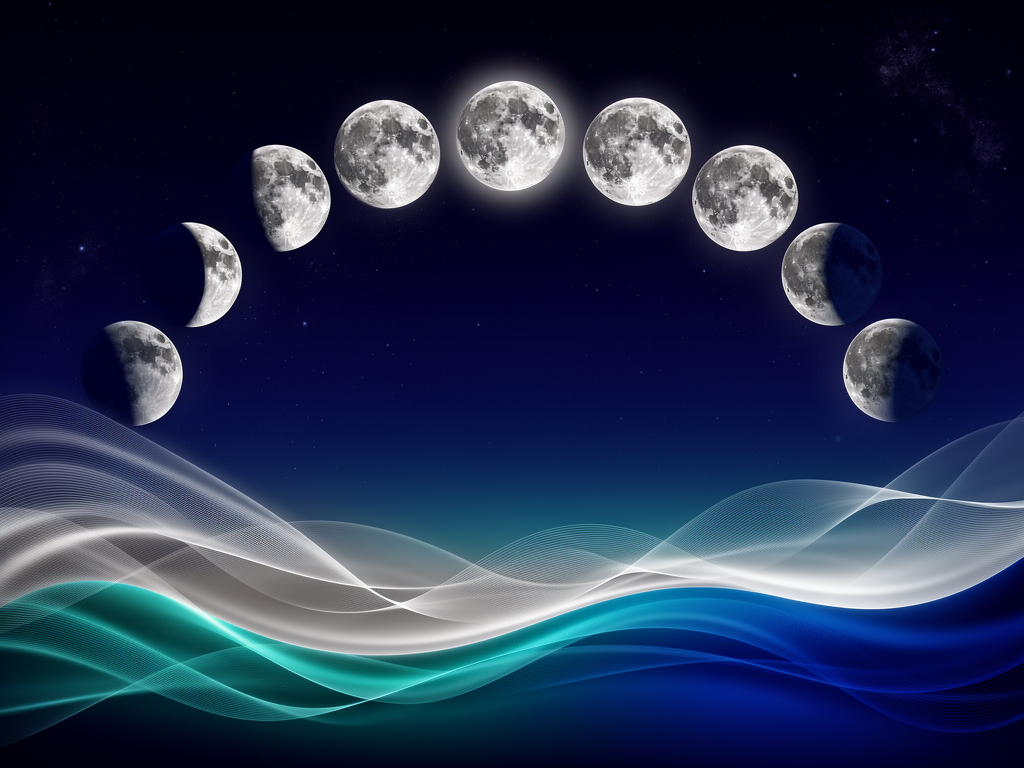
The concept of lunar living is not about giving away your agency to a celestial body. Rather, it is about using the moon as a profound mirror for your own internal landscape. The moon governs the tides of our planet's oceans, and considering that the human body is largely composed of water, many practitioners believe that these same gravitational forces subtly influence our emotional and energetic tides. Astrological tradition suggests that each phase of the lunar cycle offers a unique energetic signature—a quiet invitation to align our actions, creativity, and emotional processing with the natural ebb and flow of the cosmos.
By observing the moon, we grant ourselves permission to be cyclical beings. We are not designed to operate at peak productivity every single day, just as the moon is not always full. Understanding how these phases can influence your mood and energy allows you to navigate your life with greater grace, profound self-compassion, and intentionality.
The New Moon: The Void of Potential
The lunar cycle begins in darkness. During the New Moon, the sun and moon are aligned in the sky, meaning the side of the moon facing Earth is unlit. This phase represents the fertile void—the dark soil in which new seeds are planted before they ever see the light of day.
The Emotional Landscape
Emotionally, the New Moon is a time of deep introspection. You may find your energy levels are at their lowest point in the month, accompanied by a natural desire to retreat, rest, and turn inward. The noise of the external world might feel more grating than usual, as your internal landscape is calling for your attention. This is not a time for forceful action or demanding social engagements; it is a time for listening. Many people experience a sense of quiet hopefulness during this phase, a subtle stirring of new ideas and desires that have not yet taken physical form.
Practical Alignments
Astrological tradition suggests that the New Moon is the most potent time for setting intentions. Because the energy is inward and receptive, it is an ideal moment to ask yourself what you truly wish to cultivate in the coming weeks.
- Rest deeply: Allow yourself extra sleep and gentle movement.
- Set intentions: Write down your desires for the month ahead. Focus on the feeling you want to cultivate rather than rigid outcomes.
- Embrace stillness: Incorporate silent meditation or solitary walks to hear your own inner voice without distraction.
The Waxing Moon: Building Momentum
As the moon slowly begins to reveal its illuminated face, transitioning from a delicate silver crescent to a bright gibbous moon, the energy of the cycle shifts from internal to external. This is the waxing phase, a nearly two-week period of building momentum, gathering resources, and taking action.
The Emotional Landscape
During the Waxing Moon, you will likely notice a steady increase in your vitality and motivation. The heavy, introspective energy of the New Moon begins to lift, replaced by a sense of optimism and forward motion. Emotionally, this is often a time of resilience and curiosity. You may feel more capable of handling challenges, more eager to socialize, and deeply inspired to bring your New Moon intentions into physical reality. Creativity flows more easily, and the desire to connect, collaborate, and construct is heightened.
Practical Alignments
This phase asks us to step out of the dreaming phase and into the doing phase. It is a time of active cultivation and expansion.
- Take tangible steps: Break your larger intentions down into actionable tasks and begin executing them.
- Nourish your body: As your energy output increases, ensure you are supporting yourself with nutrient-dense foods and active, invigorating exercise.
- Say yes to connection: Schedule meetings, brainstorm sessions, and social gatherings. Your capacity for outward engagement is naturally supported now.
The Full Moon: Illumination and Release
The Full Moon occurs when the sun and moon are directly opposite each other, with the Earth in between. The moon is completely illuminated, reflecting the maximum amount of solar light. This phase represents the climax of the lunar cycle—a peak of energy, visibility, and emotional intensity.
The Emotional Landscape
The Full Moon is famous for its intensity. Because it represents illumination, whatever has been hiding in the shadows of your subconscious often rises to the surface. Many practitioners believe that the Full Moon amplifies whatever emotions are already present within you. If you have been feeling joyful, you may experience absolute euphoria; if you have been suppressing anger or grief, those feelings may demand to be felt. You might feel highly energized, passionate, or even restless, sometimes finding it difficult to sleep. It is a time of culmination, celebration, but also of profound realization.
Practical Alignments
Because the Full Moon brings things to light, it is the natural time to evaluate what is working and what needs to be released. It is a moment of letting go of the habits, mindsets, or situations that are no longer serving your highest good.
- Practice forgiveness: Whether forgiving yourself or others, the Full Moon supports the release of old grievances.
- Celebrate your progress: Acknowledge what you have built and achieved since the New Moon. Gratitude is deeply magnified during this time.
- Engage in a release ritual: Write down fears, doubts, or limiting beliefs on a piece of paper, and safely burn or tear it up as a symbolic act of letting go.
The Waning Moon: Integration and Rest
Following the brilliant peak of the Full Moon, the light begins to recede. The moon slowly shrinks back to a crescent before disappearing into the New Moon once more. This waning phase is the exhale of the lunar cycle. It is a time of winding down, digesting experiences, and clearing space.
The Emotional Landscape
As the light wanes, so too does our outward-facing energy. You may notice a gradual shift from wanting to be visible to seeking privacy. Emotionally, this is a time of integration. You might feel reflective, sensitive, and perhaps a bit tender as you process the intense illuminations of the Full Moon. There is a natural desire to simplify, to organize, and to retreat from the hustle of the outside world. If you resist this natural winding down and attempt to push forward with relentless action, you may experience heightened frustration or burnout.
Practical Alignments
The Waning Moon invites us to clear the decks. It is the perfect time for tying up loose ends rather than starting entirely new projects.
- Declutter your space: Clean your home, organize your digital files, and create physical space for the new cycle ahead.
- Reflect and refine: Review the past few weeks. What lessons did you learn? What needs to be adjusted before the next New Moon?
- Prioritize self-care: Transition back into gentler forms of movement, such as restorative yoga or stretching, and begin to guard your energy and boundaries more closely.
Living in Alignment: A Modern Approach to Lunar Cycles
Embracing lunar living does not require you to upend your modern life. You do not need to cancel important meetings just because the moon is waning, nor do you need to force yourself to be hyper-productive if you feel fatigued during a Waxing Moon. The goal of this practice is not adherence to a rigid set of rules, but rather the cultivation of a deeper self-awareness.
Everyone's energetic blueprint is entirely unique. While the archetypal journey of the moon provides a beautiful framework, your personal experience may vary. Some individuals actually feel most energized during the dark of the New Moon, while others find the Full Moon deeply grounding rather than chaotic. The true wisdom of lunar living lies in observation. By paying attention to the sky above, you are ultimately learning to pay closer attention to the landscape within.
This practice is designed to foster profound self-trust. When you begin to view your emotional fluctuations not as flaws to be fixed, but as natural seasons to be honored, you liberate yourself from the exhausting expectation of perpetual sameness. You learn that, like the moon, you are allowed to have phases. You are allowed to retreat into darkness to rest, and you are allowed to shine brilliantly when the time is right.
A Lunar Reflection Prompt
To begin aligning with these rhythms, you do not need complex rituals or esoteric tools. You simply need your own attention. Tonight, step outside or look out your window to observe the current phase of the moon. Regardless of what phase it is in, take a notebook and respond to the following reflection prompt:
"If my current emotional energy were a phase of the moon—dark and resting, building and active, bright and intense, or quiet and releasing—what phase would I be in right now? How can I honor and support this specific energy today, rather than fighting against it?"
Allow this simple act of witnessing to anchor you in the present moment, reminding you that you are a vital, breathing part of the magnificent, cyclical universe.