For millennia, humanity has looked up at the night sky not just to navigate the physical world, but to map the contours of the human soul. If you have ever read a horoscope and thought, "This doesn't quite sound like me," you have already brushed up against the limitations of Sun-sign astrology. You are far more complex than a single zodiac sign. You are a unique tapestry of celestial influences, woven together at the exact moment you took your first breath.
Astrological tradition suggests that your birth chart—also known as a natal chart—is a snapshot of the heavens at the precise time, date, and location of your birth. Think of it as a cosmic blueprint. It does not dictate your fate, nor does it override your free will. Rather, this practice is designed to illuminate your inherent strengths, your hidden challenges, and the archetypal energies you have available to you in this lifetime.
Whether you are a seasoned spiritual seeker or simply curious about the rhythms of the universe, learning to read your birth chart is a profound act of self-discovery. Here is a complete beginner's guide to understanding the celestial map you were born with.
The Anatomy of a Cosmic Blueprint
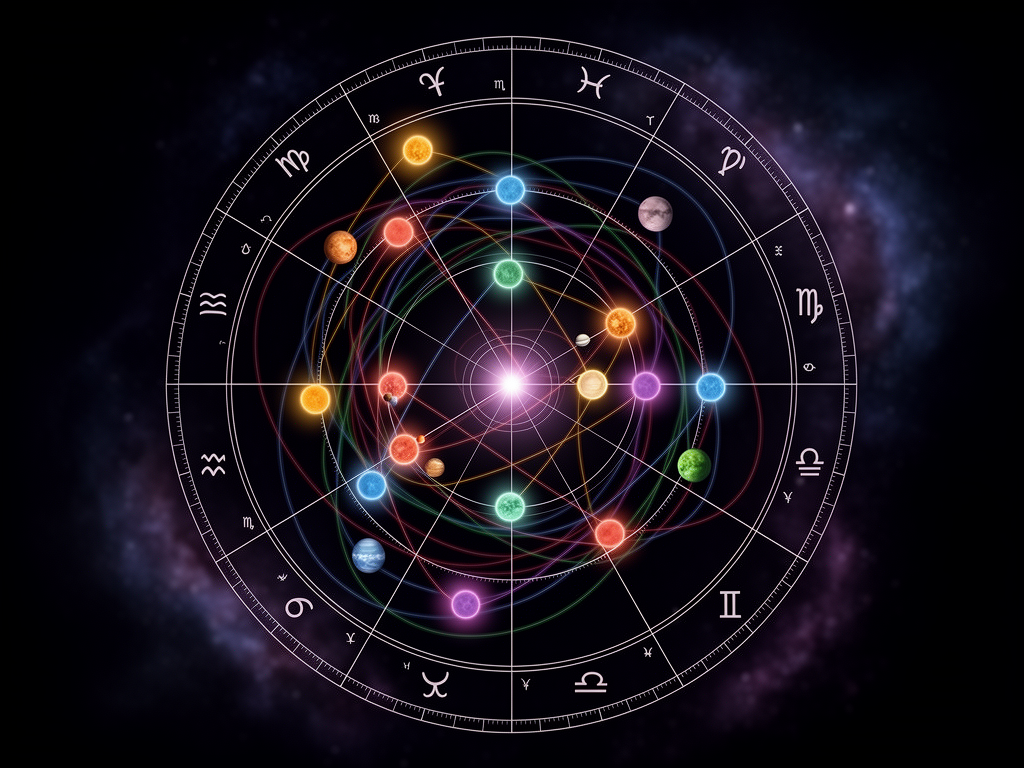
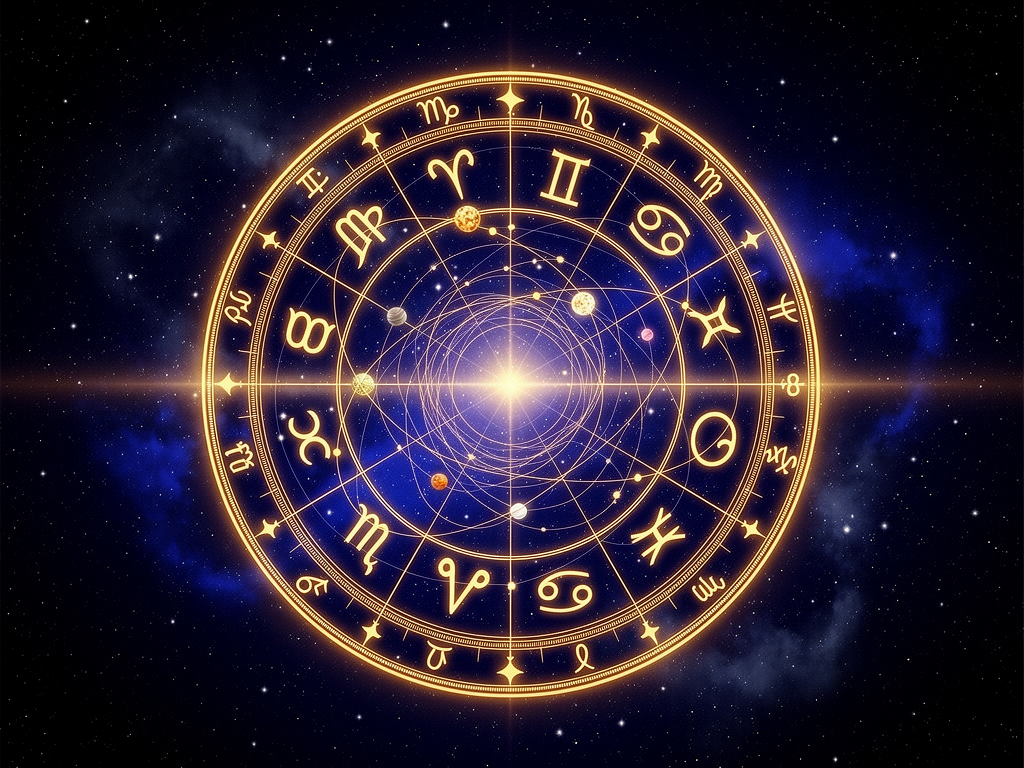
To understand a birth chart, imagine standing on Earth and looking out at the solar system. The chart is a two-dimensional wheel divided into twelve sections, representing the twelve signs of the zodiac and the twelve "houses" of life. Placed around this wheel are the planets, the Sun, and the Moon.
Many practitioners believe that the planets represent what energy is acting, the zodiac signs represent how that energy is expressed, and the houses represent where in your life that energy plays out.
When you look at your chart for the first time, it may look like a chaotic web of glyphs and lines. Do not let this overwhelm you. Like any language, astrology is best learned one symbol at a time. We begin with the most foundational pillars of your chart: the Primal Triad.
The Primal Triad: Your Sun, Moon, and Rising
While your Sun sign is the most commonly known placement, it is only one-third of your core astrological identity. Together, your Sun, Moon, and Rising sign form the "Big Three," providing a remarkably accurate summary of your personality.
The Sun: Your Core Essence
Your Sun sign represents your fundamental essence, your ego, and your vital life force. It is the core of who you are learning to become. If your birth chart is a theatrical play, the Sun is the lead character. It dictates your overarching motivations, your conscious mind, and where you naturally seek to shine. However, the Sun is just the baseline. A Leo Sun may share a desire for creative expression with other Leos, but how they process emotions or interact with the world will depend entirely on the rest of their chart.
The Moon: Your Inner Sanctuary
If the Sun is your conscious self, the Moon is your subconscious. The Moon sign governs your emotional landscape, your intuition, and your deepest needs for safety and comfort. It is the part of you that comes out when you are entirely alone or with your most trusted loved ones. Understanding your Moon sign is often the most validating part of reading a birth chart. For instance, an individual with a fiery Aries Sun might possess a sensitive, watery Cancer Moon, explaining why they are fiercely independent yet deeply crave a nurturing home environment.
The Rising Sign (Ascendant): Your Interface with the World
Your Rising sign—or Ascendant—is the zodiac sign that was ascending on the eastern horizon at the exact moment of your birth. This placement dictates the "mask" you wear when you meet the world, your initial outward demeanor, and the first impression you make on others. It is the doorway through which you express your Sun and Moon. Because the Ascendant changes sign approximately every two hours, an accurate birth time is absolutely essential to determine this placement.
The Personal Planets: How You Think, Love, and Act
Moving outward from the luminaries (the Sun and Moon), we encounter the personal planets. These celestial bodies orbit relatively close to Earth and move quickly through the zodiac, meaning their placements are highly individualized and govern our day-to-day psychology.
Mercury: The Messenger
Named after the winged messenger of the gods, Mercury rules communication, intellect, and the mind. Your Mercury sign explains how you process information, how you learn, and how you articulate your thoughts. A person with Mercury in analytical Virgo will communicate with precision and logic, whereas someone with Mercury in poetic Pisces may speak in metaphors and rely heavily on intuition.
Venus: The Lover and Aesthete
Venus is the planet of love, beauty, values, and pleasure. It reveals what you find attractive, how you behave in romantic relationships, and what brings you joy. Beyond romance, Venus also speaks to your relationship with money and aesthetics. Venus in Taurus might seek comfort, luxury, and steadfast loyalty, while Venus in Aquarius might value intellectual stimulation, unconventional beauty, and profound freedom in partnerships.
Mars: The Warrior
Mars governs our primal drives, our ambition, our physical energy, and how we assert ourselves. It is the planet of action and conflict. Knowing your Mars sign can help you understand how you pursue your goals and how you express anger. A harmonious relationship with your Mars placement allows you to channel your inner fire constructively, rather than letting it burn out of control.
The Social and Outer Planets: Growth, Structure, and Transformation
As we move further out into the solar system, the planets take years—sometimes decades—to move through a single zodiac sign. Therefore, these planets often shape the themes of entire generations, though their placement in your specific "houses" will individualize their impact on your life.
Jupiter and Saturn: The Great Teachers
Jupiter is the planet of expansion, abundance, philosophy, and luck. It points to where you naturally experience growth and where you are called to take leaps of faith. Saturn, by contrast, is the planet of restriction, discipline, karma, and time. Saturn shows you where you must learn hard lessons, build enduring structures, and take responsibility. Together, Jupiter and Saturn act as the cosmic accelerators and brakes, teaching us the balance between limitless optimism and grounded realism.
Uranus, Neptune, and Pluto: The Generational Shifters
Uranus is the rebel, governing sudden awakenings, innovation, and where you are meant to break the rules. Neptune is the mystic, ruling dreams, illusions, spirituality, and boundless compassion. Pluto is the transformer, overseeing the cycles of death and rebirth, power dynamics, and profound psychological regeneration. While these planets shape collective eras, their placement in your chart points to where you are uniquely plugged into these massive, evolutionary currents.
The Twelve Houses: The Stages of Your Life
If the planets are the actors and the zodiac signs are their costumes, the twelve houses are the stages upon which the play of your life unfolds. The wheel of your chart is divided into these twelve sectors, beginning with the 1st House (which is always your Rising sign) and moving counter-clockwise.
- First House: Self, identity, physical appearance.
- Second House: Values, personal finances, material possessions.
- Third House: Communication, siblings, local community, short trips.
- Fourth House: Home, roots, ancestry, private life.
- Fifth House: Creativity, romance, children, joy.
- Sixth House: Daily routines, health, service, habits.
- Seventh House: Partnerships, marriage, one-on-one relationships.
- Eighth House: Transformation, shared resources, intimacy, mysteries.
- Ninth House: Higher learning, philosophy, long-distance travel, beliefs.
- Tenth House: Career, public image, legacy, authority.
- Eleventh House: Friendships, networks, collective goals, hopes.
- Twelfth House: The subconscious, hidden matters, spirituality, closure.
By looking at which planets fall into which houses, you can see where specific energies will manifest. For example, having Venus (love and money) in the 10th House (career) might suggest a profession in the arts, or finding romantic partnerships through your professional network.
Practical Steps: How to Generate and Read Your Chart
Embarking on this astrological journey requires a few practical steps. Here is how you can begin exploring your cosmic blueprint today:
- Gather Your Birth Data: You will need your exact birth date, birth location (city and state/country), and most importantly, your exact birth time. Even a few minutes can shift your Rising sign or move planets into different houses. If you do not know your birth time, check your long-form birth certificate.
- Generate Your Chart: Use a reputable, free online astrological calculator (such as Astro.com or Astro-Seek). Enter your data to generate your natal chart wheel.
- Start Small: Do not try to interpret the entire chart at once. Begin by identifying your Sun, Moon, and Rising signs. Read about these three placements independently, and then reflect on how they interact within you.
- Observe the Houses: Look at where your Sun and Moon are placed. Which house are they in? This will tell you where your core ego and your emotional needs are most strongly focused in your daily life.
Integrating the Wisdom
Astrology is a mirror, not a crystal ball. It is essential to approach your birth chart with curiosity rather than a desire for rigid certainty. Please remember that astrology should never be used to make absolute medical claims or definitive predictions about your future. You are a living, breathing, evolving being. Your chart shows your potential, but you are the one who must actualize it.
Many practitioners believe that the true power of astrology lies in its ability to foster deep self-compassion. When you understand that your tendency to overthink is simply your Gemini Mercury doing its job, or that your need for solitary retreat is a natural expression of your 12th House Moon, you can stop judging yourself. You can begin to work with your nature, rather than against it.
A Closing Reflection Practice
To ground this knowledge, take a moment to reflect on your "Big Three" (Sun, Moon, and Rising). Grab a journal and write down these three placements.
Reflection Prompt: How does my Rising sign protect my Moon sign? How does my Sun sign shine through them both?
Consider how your outward demeanor (Rising) creates a safe space for your vulnerable emotions (Moon), allowing your core essence (Sun) to engage with the world. By contemplating this dynamic, you take your first conscious step into the beautiful, complex architecture of your cosmic blueprint.