In the modern era, the search for purpose has become a source of profound anxiety. We are constantly urged to "find our passion," optimize our careers, and monetize our deepest interests. This relentless pursuit often traps us in a labyrinth of overthinking, where we attempt to logically deduce the meaning of our lives through pros and cons lists, personality tests, and endless mental mapping. Yet, despite our most rigorous intellectual efforts, many of us are left feeling untethered, sensing an underlying void that no external achievement can quite fill.
Enter the ancient concept of Dharma. Rooted in the spiritual traditions of India, including Hinduism and Buddhism, Dharma is a multifaceted word that defies simple translation. Derived from the Sanskrit root dhri, which means "to uphold, support, or maintain," Dharma refers to the cosmic law and order that sustains the universe. On a personal level, it is your sacred duty, your intrinsic nature, and your essential life purpose.
Your Dharma is not a job title. It is the unique energetic frequency you were born to emit, the specific way your soul is meant to support the tapestry of existence. Discovering it is not an act of intellectual invention, but a process of spiritual excavation. It requires us to move beyond the chatter of the conscious mind and drop into the deep, quiet wisdom of the heart.
The Two Faces of Dharma: Universal and Personal
To truly understand how to align with your purpose, it is helpful to recognize the two primary dimensions of Dharma: Sanatana Dharma and Svadharma.
Sanatana Dharma translates to the eternal or universal law. It encompasses the overarching moral and spiritual principles that govern all of existence—truth, compassion, non-violence, and purity. It is the underlying harmony of the cosmos. When we act with kindness and integrity, we are aligning with universal Dharma.
Svadharma, on the other hand, is your individual duty. It is the specific role you are meant to play within the greater whole. The Bhagavad Gita, one of the most revered texts of ancient Indian philosophy, speaks profoundly to the concept of Svadharma. It famously advises that it is better to perform your own Dharma imperfectly than to perform another person's Dharma perfectly. Trying to live someone else's life—mimicking their success, adopting their values, or chasing their definition of purpose—ultimately leads to spiritual exhaustion.
Your Svadharma is intimately tied to your innate gifts, your temperament, and the unique circumstances of your life. The oak tree's Dharma is to provide shade and produce acorns; the river's Dharma is to flow toward the ocean. Your Dharma is to be entirely and unapologetically yourself, expressing your natural gifts in service to the world.
Why Thinking Cannot Reveal Your Path
The intellect is a magnificent tool for navigating the practicalities of daily life, but it is a terrible compass for the soul. The mind operates on logic, past conditioning, societal expectations, and fear. When we try to think our way into our purpose, we often end up constructing a life based on what we believe we should do, rather than what we are called to do.
Many practitioners believe that the mind is fundamentally limited by what it has already experienced. Dharma, however, often calls us into the unknown. It asks us to step beyond the boundaries of our conditioning and trust a deeper, more intuitive form of knowing.
If you find yourself paralyzed by analysis, constantly weighing options without ever feeling a sense of deep resonance, it is a sign that you are trying to solve a spiritual puzzle with a mental tool. Purpose is not discovered through thinking; it is revealed through practice, service, and alignment with your deepest nature.
The Sacred Mirror: Spiritual Practices to Uncover Dharma
If we cannot think our way into our purpose, how do we find it? The answer lies in spiritual practice. By clearing the static of the ego and tuning the instrument of the body and mind, we create the conditions for our Dharma to reveal itself.
Cultivating Stillness Through Meditation
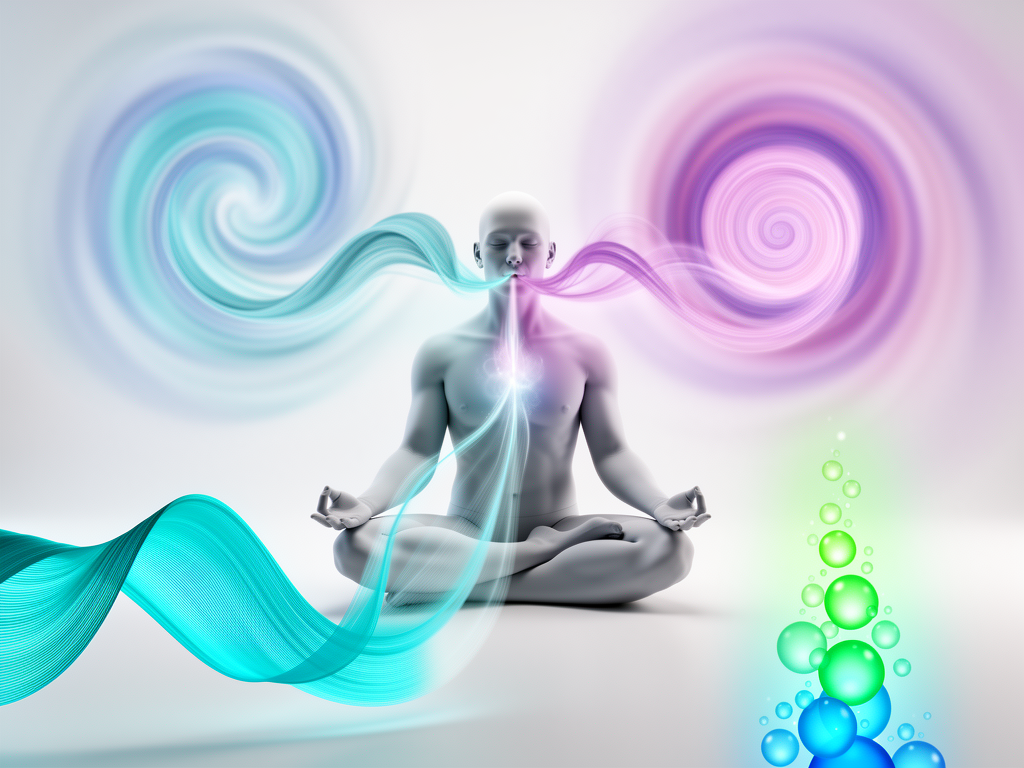
In our hyper-connected world, our attention is constantly fractured. Meditation is the antidote to this fragmentation. It is not merely a relaxation technique; this practice is designed to create a gap between your true self and your thoughts.
When you sit in silence, observing the breath or resting in open awareness, you slowly allow the sediment of the mind to settle. In this clarity, the voice of your intuition—the whisper of your soul—can finally be heard. Meditation teaches us to listen. It helps us distinguish between the loud, demanding voice of the ego (which seeks validation, status, and security) and the quiet, steady pull of our Dharma (which seeks expression, connection, and truth).
The Path of Seva (Selfless Service)
One of the most profound pathways to discovering your purpose is through Seva, or selfless service. Seva is action taken without attachment to the outcome, performed simply for the benefit of others or the divine.
When we are desperately trying to "find our purpose," we are often completely self-absorbed. We are focused on our own fulfillment, our own success, our own legacy. Seva flips this paradigm. By shifting our focus outward and asking, "How can I help?" or "What is needed in this moment?" we bypass the ego's anxiety.
Through service, we often stumble upon our true gifts. You might volunteer at a community garden and discover a profound connection to the earth and teaching others about nourishment. You might listen to a friend in crisis and realize your innate capacity for healing and holding space. Dharma is frequently found in the intersection between what brings you joy and what the world deeply needs.
Svadhyaya: The Art of Self-Study
Svadhyaya is the yogic practice of self-study and self-reflection. It involves observing your own habits, reactions, and desires with a compassionate but objective eye.
To uncover your Dharma, you must become a student of your own energy. Notice what activities leave you feeling depleted and resentful, and what activities leave you feeling expansive and energized, even if they are physically tiring. Your energy is a highly accurate compass. When you are aligned with your Dharma, you experience a sense of flow—time seems to dilate, and the work itself becomes its own reward.
Cosmic Blueprints and Energetic Alignment
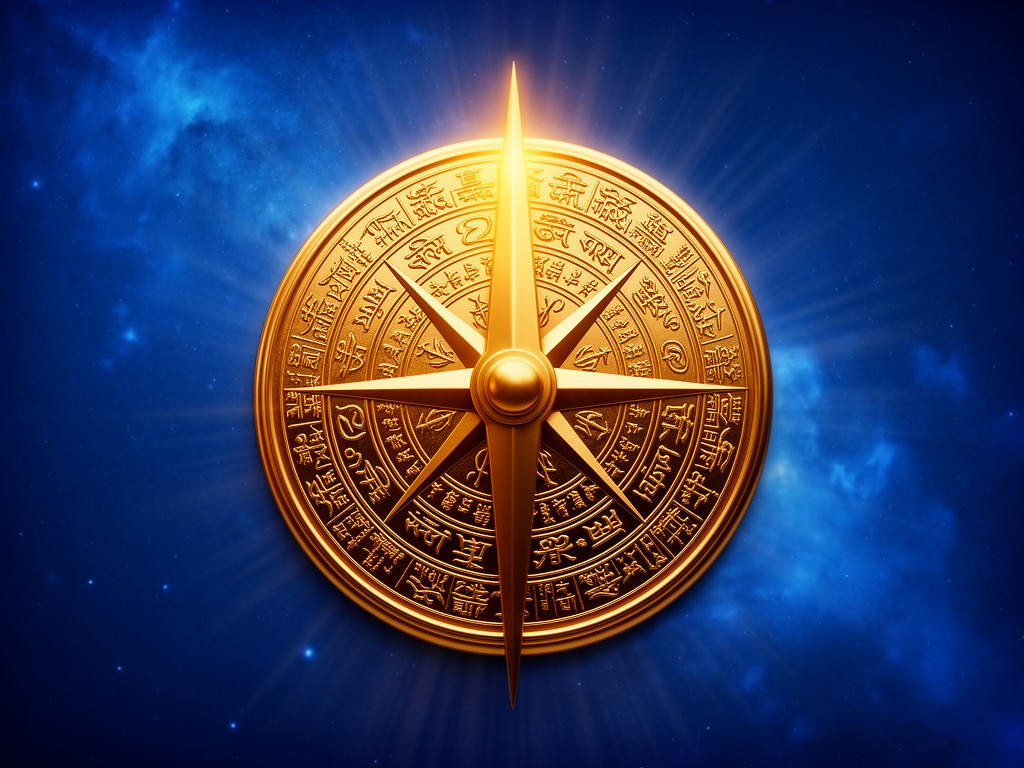
Beyond personal introspection, many spiritual seekers look to the broader rhythms of the universe to understand their path. For instance, astrological tradition suggests that the alignment of the stars and planets at the moment of our birth can offer a symbolic map of our soul's intentions.
In Vedic astrology (Jyotish), certain planetary placements and houses are deeply associated with an individual's Dharma. Elements like the North Node of the moon are often interpreted as pointing toward the soul's evolutionary edge—the unfamiliar but necessary territory we must explore to fulfill our purpose. While we should never give our power away to external systems or make absolute predictions based on them, these ancient frameworks can serve as beautiful mirrors, validating the intuitive nudges we already feel deep within and offering archetypal language for our journey.
Practical Steps for Aligning with Your Dharma in Daily Life
Discovering your Dharma is not a one-time event; it is an ongoing process of alignment. It is the commitment to making choices that resonate with your deepest truth, day after day. Here are practical ways to integrate this concept into your modern life:
- Follow the Breadcrumbs of Curiosity: Dharma rarely reveals itself as a grand, booming voice from the heavens detailing a ten-year plan. More often, it speaks through quiet whispers of curiosity. What topics do you naturally research late at night? What causes make your heart ache? Follow these gentle pulls without demanding to know where they lead.
- Practice Detachment from the Fruit of Your Actions: The Bhagavad Gita teaches us that we have a right to our labor, but not to the fruits of our labor. Focus on doing the work that feels true to you, with excellence and devotion, but release your grip on how it will be received, how much money it will make, or what status it will bring.
- Embrace the Seasons of Dharma: Your Dharma will evolve as you evolve. The Dharma of a twenty-year-old student is different from the Dharma of a new mother, which is different from the Dharma of a retiring elder. Do not cling to past versions of your purpose. Allow your Svadharma to remain fluid and responsive to the current season of your life.
- Honor Your Commitments: Sometimes, our immediate Dharma is simply taking care of the responsibilities right in front of us. Washing the dishes, caring for an aging parent, or showing up for a mundane day job with a spirit of kindness and integrity are deeply Dharmic acts when done with presence.
A Closing Practice: The Dharma Inquiry
To move this ancient wisdom from the intellect into the body, integrate the following reflection practice into your evening routine or your next meditation session.
Find a quiet space where you will not be disturbed. Light a candle to signal to your mind that you are entering a sacred, reflective space. Take a comfortable seat, close your eyes, and take five slow, deep breaths, allowing your nervous system to settle.
Place one hand on your heart and one hand on your belly. Instead of asking the overwhelming question, "What is my life's purpose?" narrow your focus to the present moment.
Ask your heart quietly: "What is my Dharma today?"
Do not force an answer. Simply hold the question in your awareness like a delicate object. The answer may come as a word, an image, a feeling, or an urge to take a specific, small action. It might be as simple as "rest," "create," "forgive," or "listen."
By honoring your daily, micro-Dharma, you are laying the stepping stones for your macro-purpose. Trust that as you align with your intrinsic nature in the small moments, the grand tapestry of your life's sacred duty will naturally and beautifully weave itself together.