For centuries, mystics, sages, and seekers have pointed to a singular, involuntary rhythm as the doorway to profound transformation: the breath. In our modern, fast-paced world, we often treat breathing as a mere biological function, a background process that keeps the physical vessel alive while our minds wander elsewhere. Yet, when we bring conscious awareness to this rhythmic tide, we unlock a profound tool for self-exploration and internal regulation.
Your breath is, quite literally, the remote control for your nervous system.
It is the only function of the autonomic nervous system—the system that governs your heart rate, digestion, and stress responses—that you can consciously alter. By changing the depth, pace, and rhythm of your breathing, you send immediate, tangible signals to your brain, shifting your physical and emotional state in real-time. This is the essence of breathwork: the intentional manipulation of the breath to influence our inner landscape.
Whether you are seeking a moment of tranquility amidst a chaotic workday, a bridge into restful slumber, a return to your center, or a surge of vital life force, the breath is an ever-present ally. Many practitioners believe that mastering the breath is the first step in mastering the mind.
Below, we explore four foundational breathwork techniques. They beautifully bridge ancient yogic wisdom with modern physiological understanding, offering you a practical toolkit to shift your state at a moment's notice.
The Bridge Between Two Worlds
Before diving into the techniques, it is helpful to understand why breathwork is so deeply revered across various spiritual traditions. In yogic philosophy, the breath is intimately connected to prana, or vital life force energy. It is believed that as we regulate the breath, we regulate the flow of prana throughout the body, clearing energetic blockages and inviting a state of harmony.
Modern science offers a complementary lens. When we breathe rapidly and shallowly into the upper chest, we activate the sympathetic nervous system—the body's "fight or flight" response. Conversely, when we breathe deeply into the belly and lengthen our exhalations, we stimulate the vagus nerve. This activation turns on the parasympathetic nervous system, signaling to the body that we are safe, allowing us to "rest and digest."
By approaching these practices with both reverence for their ancient roots and an understanding of their physiological impact, we honor the full spectrum of our human experience.
1. Box Breathing: The Anchor of Calm
Rooted in the ancient concept of Sama Vritti (equal mental fluctuations or equal breathing), Box Breathing is a technique designed to bring the mind and body into an immediate state of grounded equilibrium. Today, it is frequently utilized by high-stakes professionals, athletes, and tactical operators to maintain focus under pressure.
This practice is designed to interrupt the stress response, lower the heart rate, and clear mental fog. It is the perfect technique to employ when you feel overwhelmed, anxious, or unmoored by the demands of the day.
How to Practice Box Breathing
Imagine a square. Each side of the square represents a phase of your breath, and each phase lasts for an equal count of time—typically four seconds.
- Prepare: Sit comfortably with your spine straight and your feet flat on the floor. Gently close your eyes and exhale completely through your mouth, emptying your lungs of air.
- Inhale (The First Side): Close your lips and inhale slowly and deeply through your nose for a count of four. Feel the air fill your belly, then your ribs, and finally your chest.
- Hold (The Second Side): Retain the breath at the top of the inhale for a count of four. Do not clamp your throat shut; instead, experience this hold as a gentle, expansive pause—a moment of profound stillness.
- Exhale (The Third Side): Slowly release the breath through your nose (or pursed lips) for a count of four, feeling your body soften and relax.
- Hold (The Fourth Side): Pause again at the bottom of the exhale for a count of four, resting in the emptiness before the next cycle begins.
Repeat this cycle for four to five minutes, or until you feel a palpable sense of calm wash over you.
2. The 4-7-8 Breath: The Gateway to Sleep
Many practitioners believe that the secret to deep relaxation lies not in the inhale, but in the exhale. The 4-7-8 breath, heavily inspired by ancient pranayama techniques and popularized in modern wellness spaces, relies on this very principle. By significantly extending the exhalation, this technique acts as a natural tranquilizer for the nervous system.
This practice is designed to quiet a racing mind and ease the transition into deep, restorative sleep. It is highly recommended for those who struggle with insomnia or find themselves caught in loops of evening anxiety.
How to Practice the 4-7-8 Breath
For this technique, the ratio of the breath is more important than the absolute time. If you cannot hold your breath for seven seconds, simply speed up your counting while maintaining the 4:7:8 ratio.
- Prepare: Lie down comfortably in bed or sit in a relaxed posture. Place the tip of your tongue against the ridge of tissue just behind your upper front teeth, and keep it there through the entire exercise.
- Exhale: Part your lips slightly and exhale completely through your mouth, making a gentle "whoosh" sound.
- Inhale: Close your mouth and inhale quietly through your nose to a mental count of four.
- Hold: Hold your breath for a mental count of seven. Allow your body to remain relaxed during this retention.
- Exhale: Exhale completely through your mouth, again making a "whoosh" sound, to a mental count of eight.
This constitutes one complete breath. Inhale again and repeat the cycle three more times for a total of four breaths. Over time, as your lung capacity and comfort increase, you can gradually work your way up to eight cycles.
3. Alternate Nostril Breathing: The Return to Balance
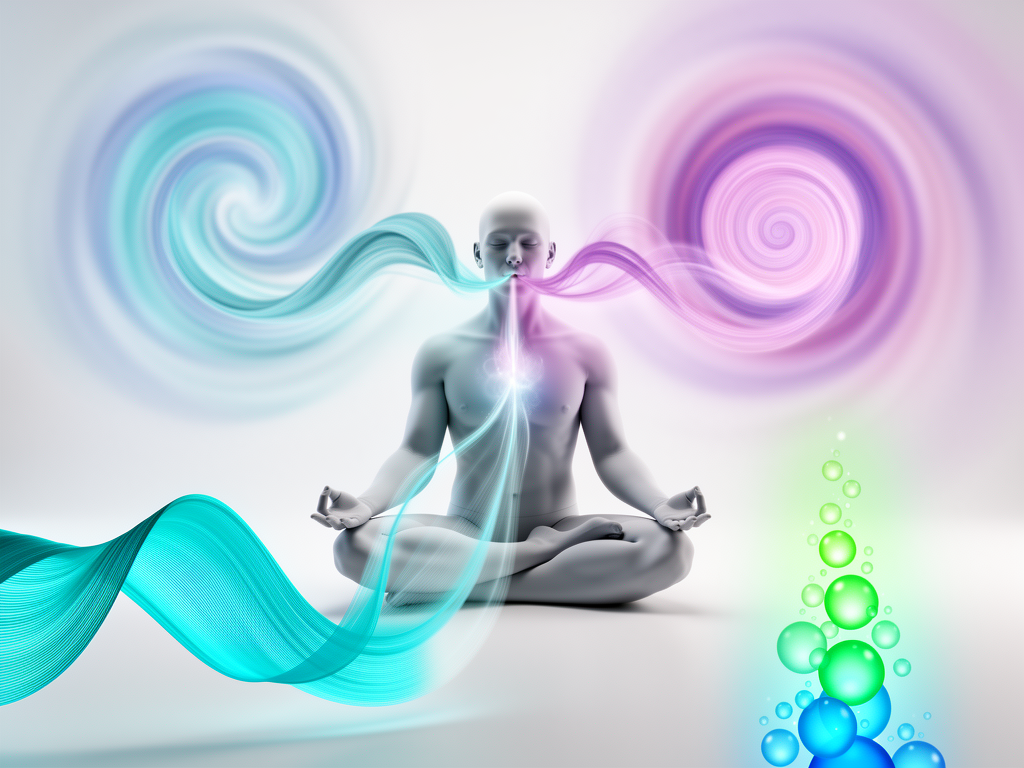
Known in the yogic tradition as Nadi Shodhana (which translates to "clearing the channels"), Alternate Nostril Breathing is a deeply revered practice for harmonizing the mind and body.
In ancient frameworks, the subtle body is mapped with thousands of energy pathways. The left nostril is associated with the Ida nadi, representing cooling, lunar, and receptive energy. The right nostril is associated with the Pingala nadi, reflecting warming, solar, and active energy. In fact, astrological tradition suggests a deep connection between our bodily rhythms and the luminaries, viewing our internal pathways as mirrors of the cosmic dance between the sun and the moon.
Modern understanding aligns with this beautifully, suggesting that alternating the breath between nostrils may help balance the right and left hemispheres of the brain. This practice is designed to center a scattered mind, making it an excellent precursor to meditation or a remedy for a mid-afternoon slump.
How to Practice Alternate Nostril Breathing
- Prepare: Sit comfortably with an elongated spine. Rest your left hand on your lap.
- Hand Mudra: Bring your right hand up to your face. Fold your index and middle fingers toward your palm. You will use your right thumb to close your right nostril, and your right ring finger to close your left nostril.
- Exhale: Close your eyes and take a deep, clearing breath in and out through your nose.
- Begin: Close your right nostril gently with your right thumb. Inhale slowly and steadily through your left nostril.
- Switch: At the top of the inhale, close your left nostril with your ring finger, so both nostrils are briefly closed.
- Exhale Right: Release your thumb and exhale completely through your right nostril.
- Inhale Right: Keep the left nostril closed, and inhale deeply through the right nostril.
- Switch: Close the right nostril with your thumb, pause briefly, then release the ring finger and exhale through the left nostril.
This completes one cycle. Continue this alternating pattern for five to ten minutes. Always strive to keep the breath smooth, silent, and unforced. Finish your practice by exhaling through the left nostril, then lower your hand and take a few normal breaths, observing the newfound clarity within.
4. Breath of Fire: The Spark of Vitality
While many breathwork practices are designed to soothe and sedate, others are meant to awaken. Breath of Fire, a variation of practices like Kapalabhati (skull-shining breath) and Bhastrika (bellows breath) found in Kundalini and Hatha yoga traditions, is a dynamic, energizing technique.
This practice is designed to build internal heat, stimulate the digestive fire located in the solar plexus, and clear stagnant energy. It is an excellent alternative to your morning cup of coffee or a powerful way to shake off lethargy. (Note: Because of its vigorous nature, many practitioners believe this technique should be approached gently, and it is generally recommended that those who are pregnant or managing untreated high blood pressure opt for gentler breathing methods instead.)
How to Practice Breath of Fire
Unlike the previous techniques, Breath of Fire focuses entirely on a forceful exhalation, allowing the inhalation to happen passively and automatically.
- Prepare: Sit up tall, ensuring your abdomen has room to expand and contract freely. Rest your hands on your knees or lightly on your belly so you can feel the movement.
- The Mechanics: Take a gentle breath in, then forcefully expel the air out through your nose by sharply snapping your navel in toward your spine.
- The Rhythm: As soon as you release the contraction of your abdominal muscles, the lungs will naturally and passively fill with air. Do not force the inhale; let it happen on its own. Immediately follow with another sharp exhale.
- The Pace: Begin slowly, perhaps one exhale per second, to ensure you have the rhythm correct: snap the belly in on the exhale, relax the belly on the inhale. As you grow comfortable, you can increase the pace to two or three cycles per second.
Try to maintain a steady, rhythmic cycle for 30 to 60 seconds. When you are finished, take a deep inhale, hold the breath gently at the top for a moment, and then exhale slowly, feeling the vibrant, buzzing energy circulating throughout your body.
Cultivating Your Personal Practice
Your breath is an unwavering companion, moving with you through every joy, sorrow, stressor, and triumph. By learning to consciously guide it, you reclaim a profound sense of agency over your own well-being. You do not need hours of free time or a dedicated meditation space to benefit from these techniques. You only need a few moments of intention.
Whether you are drawing a square of calm with Box Breathing, inviting the night with the 4-7-8 breath, finding your center with Alternate Nostril Breathing, or stoking your inner flame with Breath of Fire, remember that this is an exploration. Be gentle with yourself. Approach the practice with curiosity rather than a demand for perfection.
A Closing Reflection Prompt
Take a moment right now to simply observe your natural breath without trying to change it. Where does it live in your body? Is it shallow and high in the chest, or deep and rooted in the belly?
Actionable Practice: Choose just one of the four techniques above that resonates with your current emotional or physical state. Commit to practicing it for just three minutes today. Notice the subtle, yet profound, shift in your internal weather. How does it feel to hold the remote control to your own nervous system?