For many spiritually curious seekers, the classic image of meditation evokes a profound sense of peace: a solitary figure seated in the lotus position, eyes closed, perfectly still beneath the shade of an ancient tree. It is a beautiful archetype, one that has inspired countless individuals to turn inward. Yet, for many of us, attempting to replicate this absolute stillness feels less like a tranquil retreat and more like a psychological pressure cooker.
If closing your eyes and sitting motionless causes your mental chatter to amplify and your physical body to twitch with unspent energy, you are not failing at meditation. You are simply encountering the natural friction of a deeply activated modern nervous system meeting an ancient practice.
Meditation, at its core, is not a posture. It is a state of awareness. It is the practice of anchoring your attention in the present moment, observing your inner landscape without judgment. Many practitioners believe that when we release the rigid expectation of physical immobility, we open the door to a rich variety of active meditation styles. These dynamic practices are designed to meet the restless mind exactly where it is, using movement, rhythm, and focused imagination as vehicles for spiritual grounding.
The Wisdom of the Restless Body
Before exploring active practices, it is profoundly helpful to reframe our relationship with restlessness. In our fast-paced world, our bodies are frequently saturated with kinetic energy and stress hormones. When we suddenly demand absolute stillness from a highly stimulated system, the mind often rebels.
Many ancient traditions suggest that the body and mind are not separate entities but an intimately connected web of energy. When the mind is racing, the body often feels compelled to move; when the body is agitated, the mind struggles to settle. Rather than fighting this current, we can learn to ride it. By engaging in practices that require a gentle, rhythmic focus, we give the restless mind a constructive job to do. We allow the body to process its trapped energy, creating a natural pathway toward mental clarity.
If you find 'just sitting and breathing' to be an impossible task, consider exploring these four dynamic pathways to mindfulness.
Walking Meditation: Grounding Through Rhythm
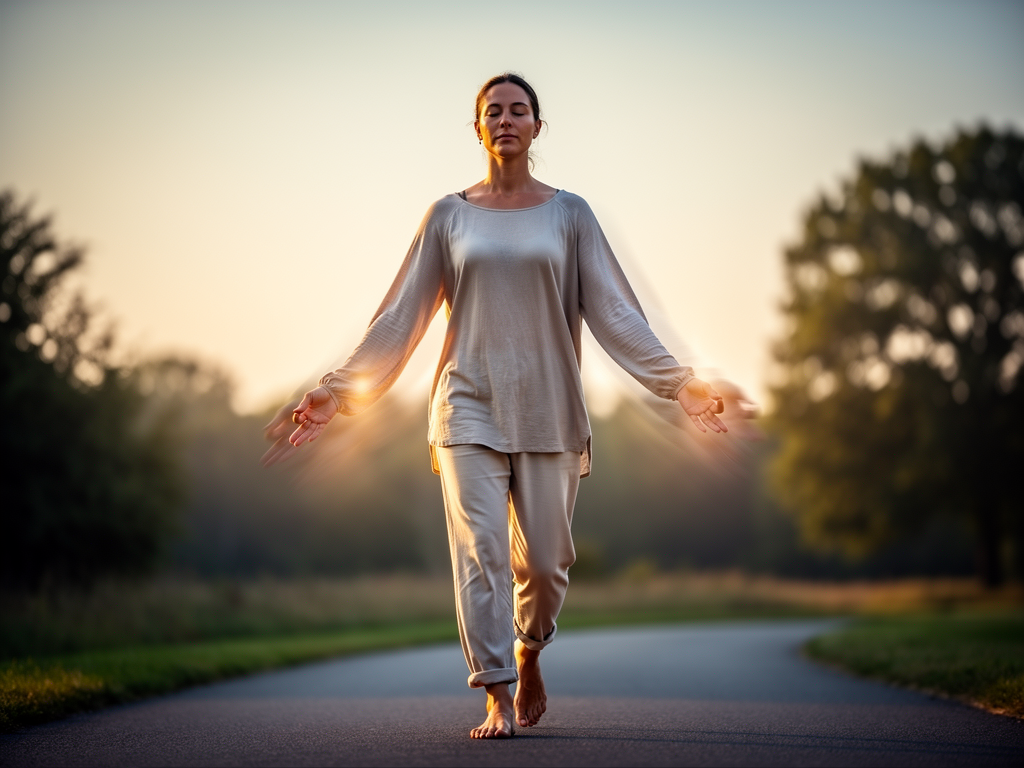
Walking meditation is a time-honored practice found across various spiritual lineages. In the Zen tradition, it is often practiced as Kinhin, a mindful pacing that serves as a bridge between periods of seated meditation. However, walking meditation can easily serve as a primary practice for those who need to move.
This practice is designed to synchronize the rhythm of your steps with the rhythm of your breath, anchoring your wandering mind to the physical sensation of the earth beneath your feet.
How to Practice Walking Meditation
- Find Your Path: Choose a quiet space where you can walk back and forth for about ten to fifteen paces. This can be a quiet hallway, a garden path, or a secluded spot in a local park. The goal is not to reach a destination but to experience the journey of each step.
- Establish Your Posture: Stand tall but relaxed. Let your arms hang loosely by your sides, or clasp your hands gently behind your back or at your heart center. Soften your gaze, letting it rest on the ground a few feet ahead of you to minimize visual distractions.
- Sync Breath and Movement: Begin to walk at a deliberately slow pace. As you lift your right foot, inhale naturally. As you place your right foot on the ground, exhale. Repeat with the left foot.
- Anchor Your Awareness: Direct your full attention to the soles of your feet. Notice the subtle shifts in your weight, the texture of the ground, and the precise moment your heel makes contact with the earth.
- Return Gently: When your mind inevitably wanders to your to-do list or past conversations, do not judge yourself. Simply acknowledge the thought and gently return your focus to the sensation of your next step.
Breathwork: The Active Anchor
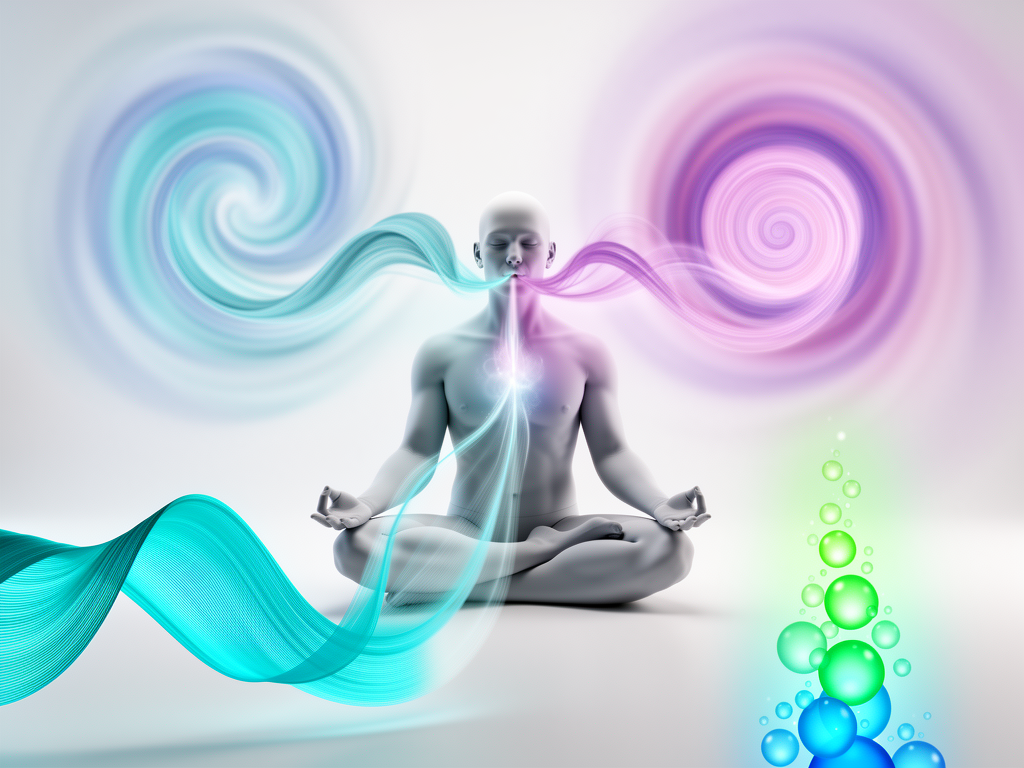
While traditional seated meditation often asks us to passively observe the breath, active breathwork (often rooted in yogic Pranayama traditions) invites us to intentionally direct and shape our breathing. For a restless mind, passive observation can feel too spacious, leaving too much room for intrusive thoughts. Active breathwork gives the mind a complex, engaging task.
Many practitioners believe that by consciously altering the depth, rhythm, and pace of our breath, we can gently signal to our nervous system that it is safe to relax, shifting from a state of 'fight or flight' into 'rest and digest.'
How to Practice Box Breathing
Box breathing is a highly accessible technique that provides a strong focal point for a busy mind. It relies on a balanced, four-part rhythm.
- Settle In: You can do this seated, standing, or even lying down. Place one hand on your belly to feel the physical movement of your breath.
- Inhale: Breathe in slowly and deeply through your nose for a count of four. Feel your belly expand outward.
- Hold: Retain the breath gently at the top of the inhale for a count of four. Try not to tense your shoulders or throat.
- Exhale: Release the breath slowly and smoothly through your mouth or nose for a count of four.
- Hold: Pause and hold the breath out, resting in the emptiness for a count of four.
- Repeat: Continue this cycle for three to five minutes. The counting acts as a tether, keeping your active mind occupied while your body reaps the benefits of rhythmic respiration.
The Body Scan: Internal Movement
What do you do when your mind is racing, but your physical circumstances (such as lying in bed unable to sleep, or sitting on a crowded train) prevent you from moving your body? You can practice internal movement.
Inspired by the ancient practice of Yoga Nidra (yogic sleep), a body scan involves moving the spotlight of your consciousness methodically through different parts of your physical vessel. This practice is designed to release deeply held muscular tension and ground scattered mental energy into the physical present.
How to Practice a Grounding Body Scan
- Find a Comfortable Position: Lie flat on your back or sit comfortably with your feet flat on the floor.
- Begin at the Base: Close your eyes and bring your entire awareness to the toes of your left foot. Notice any sensations there—warmth, coolness, tingling, or even numbness. You do not need to change the sensation; simply observe it.
- Move the Spotlight: Slowly move your awareness up through your left foot, into the ankle, the calf, the knee, and the thigh. Spend a few slow breaths in each area.
- Release Tension: As you encounter areas of tightness—perhaps in the hips, the jaw, or the shoulders—visualize your breath flowing directly into that space, gently dissolving the tension on the exhale.
- Complete the Circuit: Continue this internal scan down the right leg, up through the torso, down both arms, and finally up through the neck, face, and the crown of the head. By the time you finish, your mind has completed a complex journey without your body ever having to move.
Guided Visualization: Engaging the Imagination
For highly creative or anxious individuals, the mind is a master storyteller, constantly generating scenarios, worries, and daydreams. Rather than trying to force a vibrant, imaginative mind into a blank, empty void, guided visualization invites you to harness that creative power for peace.
By engaging the active imagination, you can construct an inner sanctuary. This practice gives the restless mind a rich, sensory experience to focus on, transforming the tendency to overthink into a tool for deep spiritual nourishment.
How to Practice Sanctuary Visualization
- Set the Scene: Close your eyes and take three deep, clearing breaths.
- Build Your World: Begin to construct a landscape in your mind's eye that represents absolute safety and tranquility to you. This could be a sunlit forest, a quiet beach at twilight, or a cozy, fire-lit room.
- Engage the Senses: Do not just look at this space; step into it. What do you hear? Perhaps the rhythmic crashing of waves or the rustle of wind through pine needles. What do you feel? Imagine the warmth of the sun on your skin or the soft moss beneath your feet. What do you smell?
- Interact with the Space: Allow yourself to actively explore this inner sanctuary. Walk around. Touch the environment. If your mind wanders to external stressors, gently remind yourself that you can leave those worries outside the borders of this sacred inner space.
- Return with Intention: When you are ready to conclude, take a deep breath, memorize the feeling of this sanctuary, and slowly open your eyes, bringing a fragment of that peace back into your waking reality.
Honoring Your Unique Path
There is no hierarchy in spiritual practice. The individual who finds enlightenment while walking a labyrinth or tending to a garden is engaging in the same profound work as the ascetic meditating in a cave. The goal is not to force yourself into a shape that does not fit, but to discover the practices that allow your unique spirit to flourish.
If stillness feels like an adversary, let movement be your ally. Let the rhythm of your feet, the intentional shaping of your breath, and the vibrant landscapes of your imagination become your sanctuary.
Actionable Practice & Reflection Prompt
The 5-Minute Integration Practice: Tomorrow morning, before looking at your phone or starting your daily tasks, try a brief integration of movement and breath. Stand up, plant your feet firmly on the floor, and slowly raise your arms above your head as you inhale deeply for a count of four. As you exhale for a count of four, slowly lower your arms back to your sides. Repeat this fluid motion five times, allowing your mind to focus solely on the synchronization of breath and movement.
Reflection Prompt: When I release the expectation that I must be perfectly still to be 'spiritual,' what activities in my daily life already feel like a form of meditation? How can I bring more intentional presence to those natural moments of flow?