The Qualitative Nature of Time
In our modern world, time is typically viewed as a rigid, quantitative grid. A minute is a minute, an hour is an hour, and each day is simply a blank container waiting to be filled with our endless to-do lists. We push against the clock, attempting to force productivity, creativity, or rest regardless of the moment's inherent rhythm. But ancient traditions understood time differently. They viewed time not merely as a ticking mechanism, but as a qualitative, living energy—a flowing river with its own currents, eddies, and tides.
Astrological tradition suggests that time is deeply textured, colored by the shifting influences of the cosmos. One of the most practical and grounding ways to connect with this ancient perspective is through the system of Planetary Hours. By understanding which planetary archetype governs a specific portion of the day, many practitioners believe we can align our daily activities—from deep creative work and difficult conversations to profound rest—with the natural energetic current of the moment.
Working with planetary hours is not about rigid adherence or superstition. Rather, this practice is designed to help us swim with the cosmic current instead of exhausting ourselves by paddling against it. It offers a framework for daily intention-setting that honors the natural ebb and flow of our human experience.
The Ancient Framework: The Chaldean Order
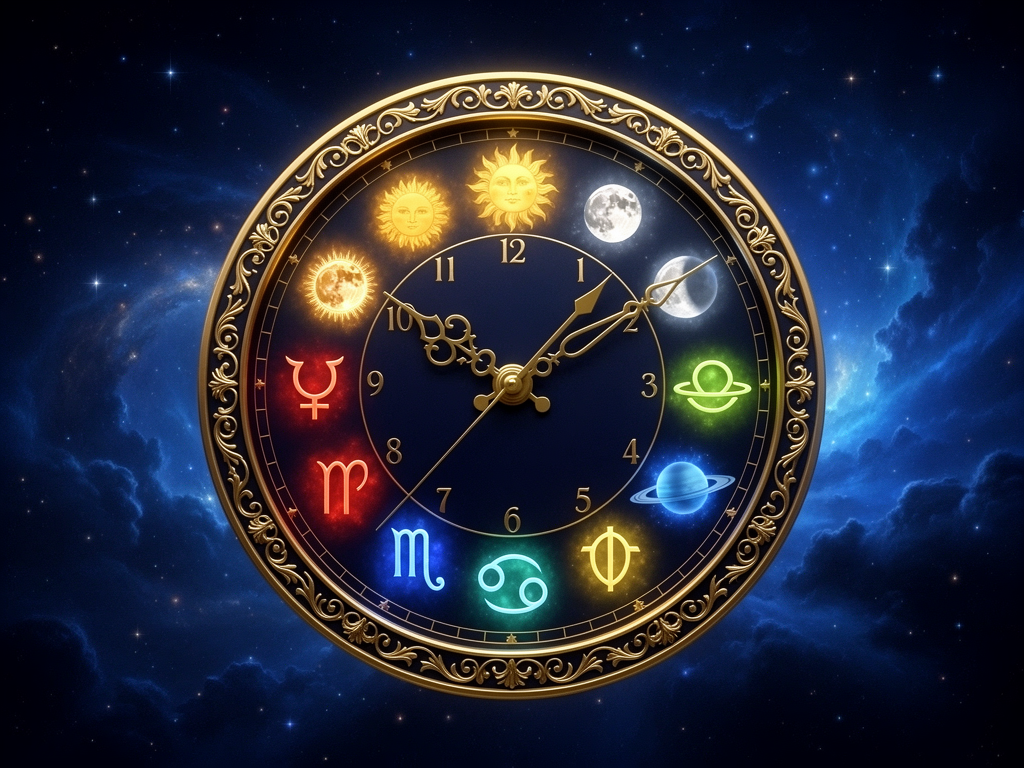
The system of planetary hours is rooted in Hellenistic astrology and is structured around what is known as the Chaldean Order. This ancient sequencing arranges the seven traditional visible planets based on their relative speed as observed from Earth, moving from the slowest to the fastest: Saturn, Jupiter, Mars, the Sun, Venus, Mercury, and the Moon.
In this system, every day of the week is ruled by a specific planet (for example, Sunday is ruled by the Sun, Monday by the Moon, and so on). The first hour of the day—beginning precisely at sunrise—is always governed by the planet that rules that day. From there, the hours cycle through the Chaldean Order in a continuous, unbroken loop.
It is important to note that a "planetary hour" is rarely sixty minutes long. Because this system is tied to the natural rhythms of the Earth, the duration of an hour changes with the seasons. The period of daylight (from sunrise to sunset) is divided into twelve equal parts, and the period of nighttime (from sunset to the next sunrise) is similarly divided into twelve equal parts. In the height of summer, daytime hours are long and expansive, while nighttime hours are brief. In winter, the reverse is true. This elegantly grounds the practice in the physical reality of our local environment.
The Seven Planetary Energies
To effectively align your daily intentions with the planetary hours, it is helpful to understand the archetypal energy of each of the seven traditional planets. Here is how astrological tradition suggests we might partner with these cosmic forces.
The Sun: Vitality, Visibility, and Leadership
The Sun represents our core vitality, illumination, and the conscious self. Hours governed by the Sun are infused with clarity, warmth, and visibility. Many practitioners believe that this is an optimal time for activities where you need to be seen, heard, and recognized.
Ideal Intentions for Sun Hours:
- Pitching a new project or presenting an idea to leadership.
- Stepping into a role of authority or making executive decisions.
- Engaging in practices that cultivate self-confidence and personal empowerment.
- Sending important communications where clarity and truth are paramount.
The Moon: Intuition, Rest, and Emotional Processing
The Moon moves quickly, governing the tides of our oceans and, symbolically, the tides of our emotions. Lunar energy is fluid, reflective, and deeply intuitive. A Moon hour is rarely the time for forceful action; rather, it invites turning inward, nurturing, and tending to the subtle realms of our experience.
Ideal Intentions for Moon Hours:
- Engaging in domestic tasks, such as cooking, cleaning, or tending to your home environment.
- Journaling, meditating, or engaging in shadow work and emotional processing.
- Taking a restorative nap or simply allowing yourself a period of unstructured daydreaming.
- Connecting with family members or offering care to someone in need.
Mercury: Communication, Intellect, and Commerce
Mercury is the swift-footed messenger of the gods, ruling over all forms of exchange: words, ideas, commerce, and travel. Hours ruled by Mercury are characterized by mental agility and quickened pacing. This is an excellent time to tackle tasks that require focus, articulation, and adaptability.
Ideal Intentions for Mercury Hours:
- Clearing out your email inbox or returning phone calls.
- Writing, editing, coding, or engaging in detailed analytical work.
- Running errands, organizing your schedule, or planning travel logistics.
- Brainstorming sessions where rapid-fire idea generation is needed.
Venus: Connection, Aesthetics, and Pleasure
Venus is the archetype of harmony, beauty, relationship, and pleasure. During a Venus hour, the energetic atmosphere tends to soften, becoming more receptive and gracious. This practice is designed to help us cultivate connection and bring aesthetic beauty into our daily lives, making it a wonderful time for both art and diplomacy.
Ideal Intentions for Venus Hours:
- Scheduling a romantic date, a lunch with a dear friend, or a collaborative meeting.
- Engaging in creative and artistic pursuits, such as design, painting, or curating a space.
- Having conversations that require diplomacy, tact, and conflict resolution.
- Practicing self-care rituals, such as a luxurious bath or a gentle skincare routine.
Mars: Action, Courage, and Separation
Mars is the warrior archetype, representing drive, assertion, and the necessary force required to overcome obstacles. While Venus brings things together, Mars separates and cuts through the noise. Mars hours are potent, dynamic, and sometimes volatile. They are best utilized when you need a surge of momentum or the courage to set a firm boundary.
Ideal Intentions for Mars Hours:
- Engaging in vigorous physical exercise or demanding manual labor.
- Tackling the most difficult, dreaded task on your to-do list that requires a push of willpower.
- Advocating for yourself, negotiating strongly, or setting necessary interpersonal boundaries.
- Decluttering a space by ruthlessly throwing away what is no longer needed.
Jupiter: Expansion, Wisdom, and Abundance
Jupiter is the great benefactor of the cosmos, associated with growth, philosophy, generosity, and good fortune. A Jupiter hour carries a buoyant, optimistic, and expansive quality. It is a time to zoom out, look at the big picture, and engage with the world from a place of abundance rather than scarcity.
Ideal Intentions for Jupiter Hours:
- Studying a new subject, reading philosophy, or engaging in higher learning.
- Setting long-term goals and vision-boarding for the future.
- Practicing profound gratitude or engaging in acts of philanthropy and generosity.
- Publishing work, launching a spiritually aligned business, or seeking mentorship.
Saturn: Structure, Discipline, and Deep Focus
Saturn is often viewed as the taskmaster—the planet of boundaries, limitations, time, and endurance. While Saturn's energy can feel heavy or restrictive, it is also deeply stabilizing. Saturn hours offer the gift of profound concentration and the discipline required to build things that will last.
Ideal Intentions for Saturn Hours:
- Engaging in "deep work" that requires unbroken concentration and solitude.
- Reviewing finances, doing taxes, or organizing administrative structures.
- Committing to long-term habits or establishing new daily routines.
- Tending to duties, obligations, and responsibilities with a sense of quiet reverence.
How to Calculate Planetary Hours
Because planetary hours are based on the exact times of sunrise and sunset in your specific geographic location, calculating them manually involves a bit of math. You must determine the total number of daylight minutes, divide by twelve to find the length of a daytime hour, and then sequence the planets starting with the ruler of the day.
Fortunately, modern technology beautifully complements this ancient wisdom. There are numerous free websites and mobile applications (such as Planetary Times or Time Nomad) that calculate these hours for you automatically based on your GPS location. For those just beginning this practice, utilizing an app is highly recommended to prevent the logistics from overshadowing the magic of the experience.
Integrating the Practice Without Overwhelm
When spiritual seekers first discover planetary hours, there is often a temptation to micromanage their entire day—refusing to send an email unless it is a Mercury hour, or feeling guilty for resting during a Mars hour. It is vital to remember that astrology should be a tool for liberation, not a source of neurosis. Modern life demands flexibility, and we cannot always control our schedules.
Instead of trying to orchestrate your entire day around the cosmos, begin by selecting just one or two important tasks. If you have a difficult conversation approaching, you might look at your app and choose to initiate it during a Venus hour to invite grace, or a Sun hour to ensure clarity. If you are struggling with a creative block, you might wait for a Jupiter or Venus hour to begin brainstorming.
Alternatively, you can use the system retrospectively. If you find yourself suddenly exhausted and unable to focus, check the current planetary hour. You may find you are in a Moon or Saturn hour, at which point you can offer yourself grace, realizing that the cosmic weather is simply not conducive to rapid-fire productivity in that moment.
The Wisdom of Cosmic Timing
Working with planetary hours invites a profound paradigm shift. It teaches us that time is not a flat, monotonous resource to be exploited, but a rich, multifaceted landscape to be navigated with intention and respect. By aligning our daily micro-actions with the macro-rhythms of the solar system, we cultivate a deeper sense of harmony, efficiency, and spiritual connection in our everyday lives.
Actionable Reflection Prompt
Tomorrow, choose just one planetary hour to observe consciously. Select an hour governed by a planet whose energy you currently need—perhaps Venus for aesthetic harmony, or Mars for courageous action. Dedicate that specific window of time to an aligned activity. Afterward, journal briefly on the experience: Did the task feel more effortless? Did you notice a shift in your internal state or the external atmosphere during that calculated window of time?