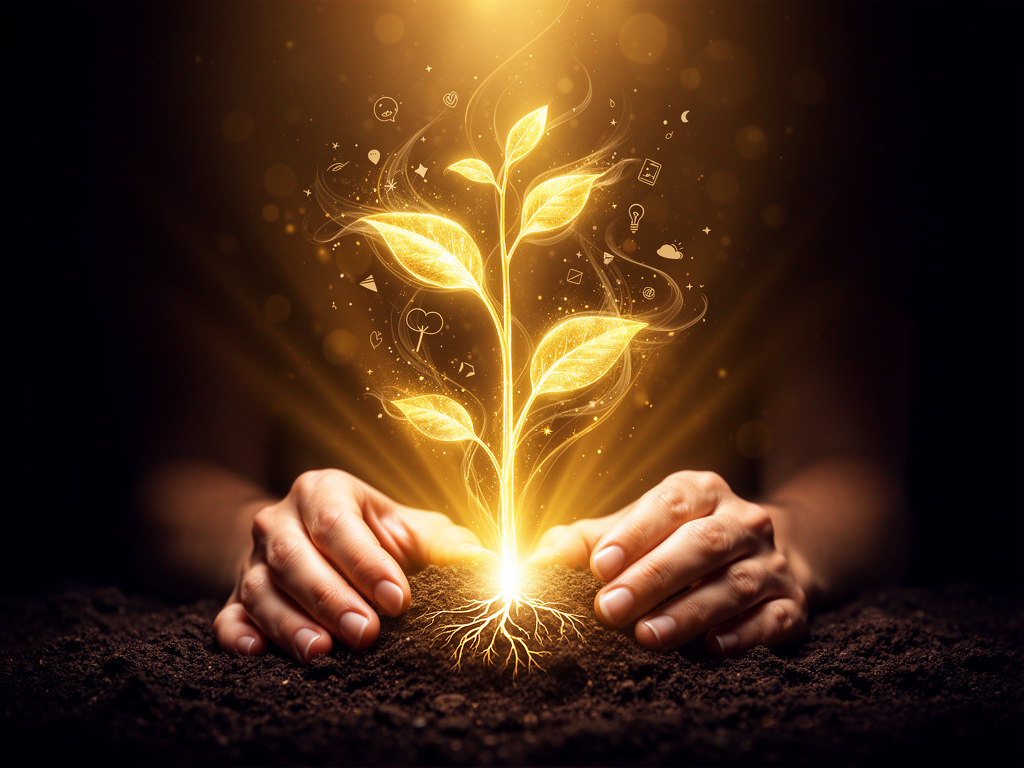

In the hurried choreography of modern life, the act of saying "thank you" has largely been reduced to a social pleasantry. We offer thanks when someone holds a door, when a barista hands us our morning coffee, or when a colleague forwards an email. While these moments of politeness are the glue that holds civil society together, they are only the shimmering surface of a much deeper well. When we explore gratitude as a dedicated spiritual practice, we uncover an ancient technology of consciousness—a profound method for rewiring the mind, shifting our energetic frequency, and fundamentally altering how we experience reality.
Deep gratitude is not merely a reaction to receiving something desirable. It is a proactive stance, a lens through which we choose to view the cosmos. It is the deliberate recognition of the interconnected web of life and our sacred place within it. By moving beyond surface-level thankfulness, we invite a transformative alchemy into our daily lives, bridging timeless spiritual wisdom with our modern understanding of the human mind.
The Energetic Architecture of Gratitude
To understand gratitude as a spiritual tool, we must first look at it through the lens of energy. Many practitioners believe that gratitude acts as an energetic tuning fork for the human system. When we are caught in cycles of fear, resentment, or scarcity, our energetic resonance becomes dense and contracted. We operate from a space of lack, constantly scanning our environment for what is missing, what is broken, or what threatens our peace.
Gratitude, however, carries a remarkably expansive frequency. When we drop into a state of genuine appreciation, we signal to our consciousness that we are safe, provided for, and abundant. This shift is not about toxic positivity or ignoring the very real pain of the human experience. Rather, it is about consciously choosing to anchor ourselves in the present moment and acknowledging the grace that exists alongside the grit.
When we radiate the frequency of gratitude, we become magnetic to serendipity. We stop fighting the current of life and instead begin to float upon it. This energetic shift creates a ripple effect, touching not only our internal landscape but also the environment and the people around us. We become a sanctuary of calm in a chaotic world, emanating a refined, grounded presence.
The Science of the Sacred: Rewiring the Mind
Our spiritual philosophies are increasingly finding resonance in modern scientific discovery. We now know that the human brain evolved with a "negativity bias"—a survival mechanism designed to keep our ancestors acutely aware of potential dangers. While this bias kept early humans safe from predators, in the modern world, it often keeps us trapped in loops of anxiety and dissatisfaction, constantly fixating on perceived threats to our ego or livelihood.
Gratitude is the antidote to this evolutionary default. While we must never make absolute predictions or medical claims about the power of positive thinking, modern understanding reveals that a consistent gratitude practice actively engages the brain's neuroplasticity. By deliberately focusing on what is good, whole, and beautiful, we begin to forge new neural pathways. Over time, the brain becomes more adept at noticing abundance rather than lack.
This is where the intersection of spirit and science becomes truly beautiful. The act of feeling deep, resonant gratitude stimulates the parasympathetic nervous system—the "rest and digest" state. It lowers the production of stress hormones and encourages heart-brain coherence. In this state of physiological harmony, our intuition sharpens, our creativity blossoms, and our spiritual connection deepens. What begins as a mental exercise transforms into a holistic, embodied experience of peace.
Radical Gratitude: The Alchemy of the Shadow
It is relatively easy to feel grateful when the sun is shining, our relationships are flourishing, and our bank accounts are full. However, the true depth of gratitude as a spiritual practice is revealed in the shadows. Radical gratitude asks us to find appreciation not only for our triumphs but also for our trials.
This does not mean we must feel thankful for trauma, abuse, or profound loss in the moment they occur. Grief and anger are sacred, necessary emotions that must be fully honored. But as the dust settles and we begin to integrate our painful experiences, radical gratitude invites us to look for the hidden teachings. We might find gratitude for the strength we discovered in our darkest hour, for the boundaries we learned to set, or for the deep well of empathy that our suffering carved out within our hearts.
By offering gratitude to our challenges, we strip them of their power to victimize us. We reclaim our agency, transforming our wounds into wisdom. This is the ultimate spiritual alchemy: turning the lead of our heaviest experiences into the gold of conscious evolution.
Aligning with Cosmic Rhythms
To deepen our practice, we can look to the natural cycles that govern our universe. Astrological tradition suggests that aligning our spiritual practices with celestial rhythms can amplify their potency. For instance, the cycle of the moon offers a powerful framework for a structured gratitude practice.
The New Moon is traditionally a time of setting intentions and planting seeds, while the Full Moon is a time of illumination, culmination, and release. Practicing deep gratitude during a Full Moon allows us to honor everything that has grown and manifested in our lives since the last lunar cycle. It is a time to stand in the light of our accomplishments and the blessings of the universe, acknowledging the unseen forces that have supported our journey.
Similarly, observing the changing of the seasons—the equinoxes and solstices—provides natural anchor points for profound reflection. Giving thanks for the fertile growth of spring, the abundant light of summer, the harvest of autumn, and the quiet rest of winter connects our internal spiritual landscape with the external rhythms of the Earth. This connection reminds us that we are not separate from nature; we are an expression of it.
Structuring Your Transformative Daily Practice
To move beyond surface-level thankfulness, gratitude must become a non-negotiable daily ritual. A structured practice ensures that we do not wait for inspiration to strike, but rather cultivate the soil of our consciousness every single day. Here is a framework for building a deep, resonant gratitude practice.
1. The Morning Resonance
Before you look at your phone, before you review your to-do list, and before you step out of bed, pause. Place one hand on your heart and one hand on your belly. Take three deep, slow breaths. As you breathe, bring to mind one simple thing you are grateful for. It could be the warmth of your blankets, the sound of rain against the window, or the simple fact that your lungs are filling with air.
This practice is designed to bypass the analytical mind and anchor you in your physical vessel. By starting your day with this somatic experience of gratitude, you set a harmonious energetic tone for the hours to follow.
2. The Gratitude Ledger
Journaling is a cornerstone of spiritual inquiry. Dedicate a specific notebook solely to your gratitude practice. Each evening, write down three things you are grateful for. However, the key to depth is specificity. Do not simply write, "I am grateful for my family." Instead, write, "I am grateful for the way my partner laughed at my joke during dinner, and the feeling of connection it brought me."
By detailing the sensory and emotional aspects of the experience, you force your brain to relive the moment, thereby doubling the energetic benefit. You are not just recording the event; you are re-experiencing the joy.
3. The Gratitude Walk
Once a week, take a mindful walk with the sole intention of experiencing gratitude. Leave your phone and headphones behind. As you walk, actively look for things to appreciate: the intricate pattern of veins on a fallen leaf, the architectural beauty of a neighbor's home, the feeling of the sun on your skin, or the effortless way your body carries you forward. Silently say "thank you" to these phenomena. This practice merges mindfulness, physical movement, and spiritual appreciation into a single, powerful ritual.
4. Expressive Appreciation
Spirituality is not meant to be practiced in a vacuum; it is meant to be shared. Make it a habit to express deep, unprompted gratitude to the people in your life. Look them in the eye and tell them exactly what you appreciate about their character or their presence. Sending a heartfelt message of gratitude to someone not only elevates their frequency but instantaneously elevates your own.
The Endless Unfolding
Gratitude is not a destination; it is a way of traveling. It is a gentle, persistent unclenching of the heart. When we commit to gratitude as a structured spiritual practice, we slowly dismantle the illusions of separation and scarcity. We begin to see the divine in the mundane, the miraculous in the ordinary, and the profound beauty inherent in simply being alive.
As you move forward, remember that the depth of your gratitude dictates the depth of your joy. It is the bridge between the physical world and the spiritual realm, a quiet prayer of recognition that echoes through the cosmos.
A Final Actionable Practice and Reflection Prompt
Tonight, find a quiet space where you will not be disturbed. Light a candle to signify the transition from mundane time to sacred time. Close your eyes and bring to mind a recent challenge or frustration—something that did not go your way.
Breathe deeply into the center of your chest, and ask yourself: "What hidden strength, boundary, or clarity is this challenge asking me to develop? How can I offer gratitude to this obstacle for being a teacher in my spiritual evolution?"
Write your answer in your journal. Allow the perspective shift to wash over you, turning your friction into an opportunity for profound gratitude.