Navigating Cosmic Cycles: A Deep Dive into Astrological Transits and Personal Evolution
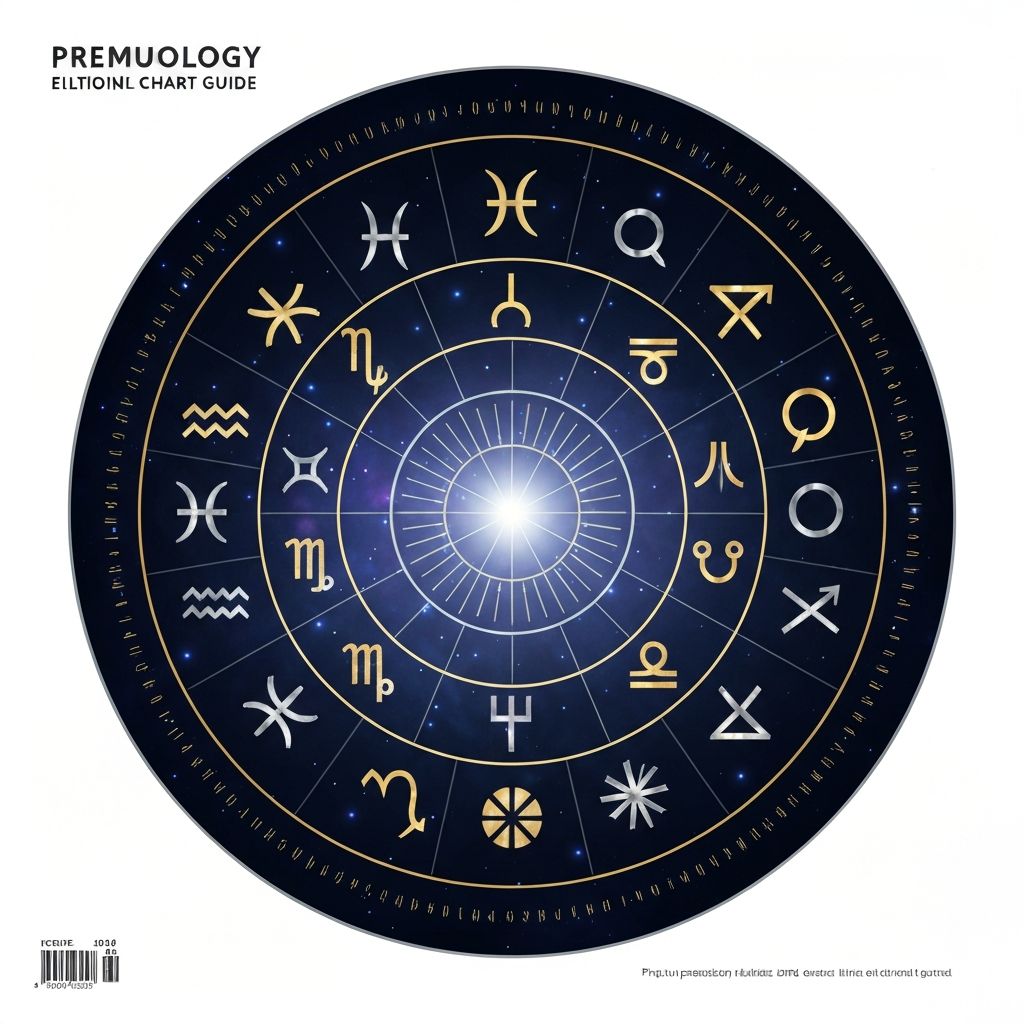
If your birth chart is the 'seed' of who you are, then transits are the seasons that determine when that seed will sprout, bloom, or go dormant. While your natal chart provides a static snapshot of the heavens at your first breath, the planets never actually stopped moving. Their ongoing journey through the zodiac creates a dynamic dialogue with your birth placements, shaping the narrative of your life in real-time.
The Mechanics of Time: What Exactly is a Transit?
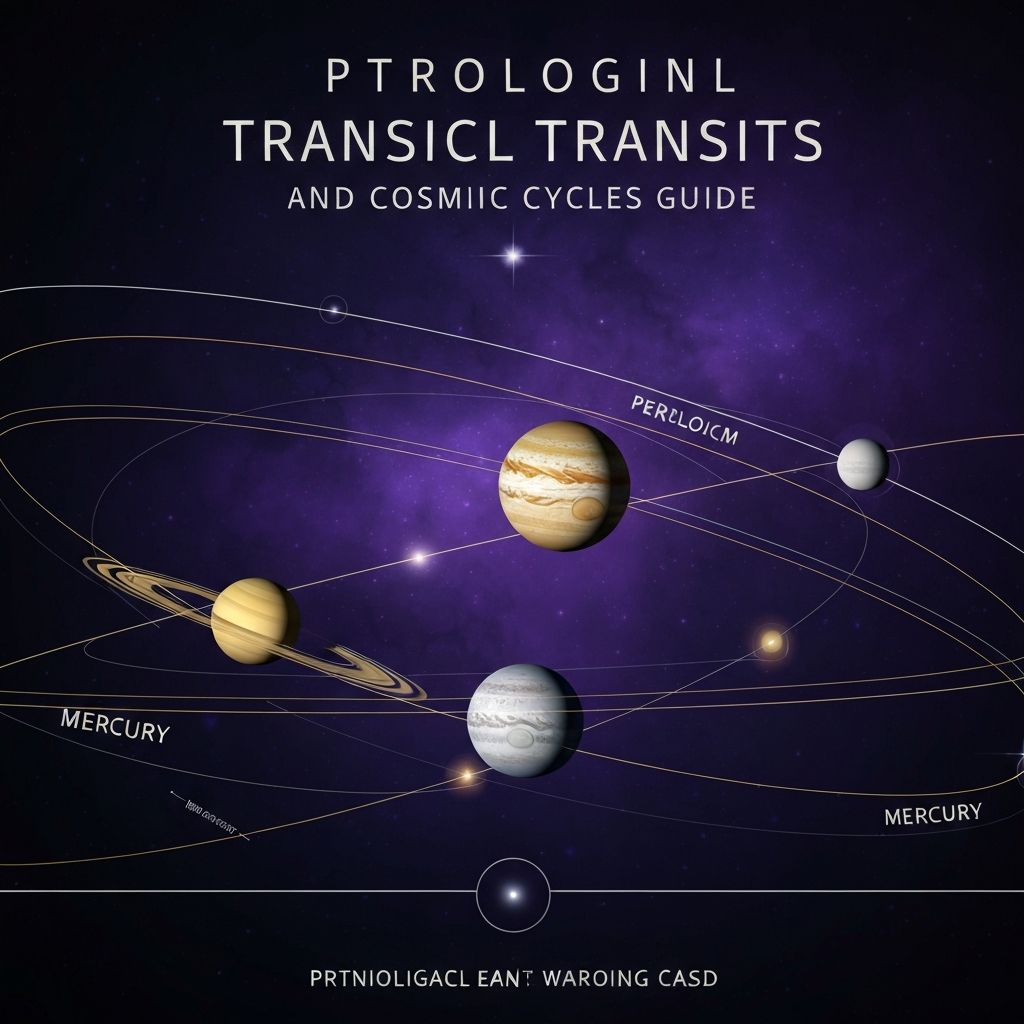
In astrology, a 'transit' occurs when a planet, in its current position in the sky, forms a geometric relationship with a planet or point in your original birth chart. For example, if you were born with the Sun in Aries, and right now Jupiter is moving through Aries, you are experiencing a 'Jupiter transit to your Sun.' These alignments act like cosmic triggers, activating the latent potential in your chart and bringing specific themes to the forefront of your consciousness.
Think of it like a radio. Your birth chart is the hardware—the dials, the speakers, and the internal wiring. Transits are the radio waves passing through the air. When a transiting planet 'hits' a natal planet, it's as if someone has tuned the dial to a specific frequency. Suddenly, a message comes through loud and clear. Some messages are harmonious and inspiring, while others are challenging or disruptive, but all are designed to facilitate your evolution.
The Inner Planets: The Fast-Moving Rhythms of Daily Life
The inner planets—the Moon, Mercury, Venus, and Mars—move quickly. Their transits are frequent and short-lived, often manifesting as passing moods, quick conversations, or minor shifts in energy. Because they move so fast, they represent the 'weather' of our lives rather than the climate.
- The Moon (Transits every 2.5 days per sign): Governs your daily emotional fluctuations. A Moon transit might simply be the reason you feel extra sensitive on a Tuesday morning or why you suddenly feel the urge to clean your entire house.
- Mercury (Transits every 3-4 weeks per sign): Influences your focus, communication, and local travel. When Mercury transits your natal Mercury, you might find your mind is sharper than usual, or you're suddenly flooded with new ideas.
- Venus (Transits every 4-5 weeks per sign): Brings themes of love, money, and pleasure. A Venus transit to your Seventh House of relationships often coincides with a period of increased social harmony or a new romantic spark.
- Mars (Transits every 6-7 weeks per sign): Acts as the cosmic gas pedal. Mars transits provide the energy and drive to get things done, but they can also trigger irritation or conflict if that energy isn't channeled constructively.
The Outer Planets: The Architects of Transformation
While the inner planets handle the day-to-day, the outer planets—Jupiter, Saturn, Uranus, Neptune, and Pluto—are responsible for the major chapters of your life. Because they move slowly, their transits can last for months or even years. When an outer planet makes a significant aspect to your chart, it signals a period of structural change that you will likely remember for the rest of your life.
Jupiter: The Great Expander
Jupiter transits are generally welcomed with open arms. Jupiter is the planet of growth, luck, and wisdom. When it transits a house in your chart, it 'inflates' that area of life. If it transits your Second House of finances, you might see an increase in income. However, Jupiter also lacks boundaries. Its shadow side can lead to over-extension, over-spending, or a false sense of invincibility. The key during a Jupiter transit is to say 'yes' to the right opportunities while maintaining a tether to reality.
Saturn: The Cosmic Auditor
Saturn has a reputation for being the 'difficult' planet, but a more accurate term would be 'exacting.' Saturn represents discipline, structure, and karma. A Saturn transit feels like a cosmic performance review. If you have been doing the work, Saturn brings rewards and stability. If you have been cutting corners, Saturn brings the consequences. These periods are characterized by a sense of weight or restriction, forcing you to slow down and build a more solid foundation.
The Generational Trio: Uranus, Neptune, and Pluto
These three planets move so slowly that they define entire generations, yet their individual transits to your chart are deeply personal. Uranus brings the lightning bolt—sudden, unexpected shifts that liberate you from situations that have become stagnant. Neptune is the mist—it dissolves boundaries and heightens intuition, but can also lead to confusion and escapism. Pluto is the volcano—it deals with the subconscious, power, and deep-seated transformation. A Pluto transit often requires a metaphorical 'death' of an old identity so that a more powerful version of yourself can be born.
The Saturn Return: The Astrological Rite of Passage
Perhaps the most famous transit in modern culture is the Saturn Return. Every 29.5 years, Saturn returns to the exact degree it occupied at the moment of your birth. This happens roughly at ages 29, 58, and 87. The first Saturn Return (around age 29) is widely considered the true transition from youth to adulthood.
The Saturn Return is a cosmic 'vibe check.' It strips away what is no longer serving your highest path and demands that you take radical responsibility for your choices. While often challenging, it is the most fertile ground for authentic self-mastery.
During this period, many people experience major life shifts: career changes, the end of long-term relationships, moving to a new city, or becoming a parent. It is a time of 'sobering up'—seeing your life for what it truly is, rather than what you hoped it would be. If you embrace the lessons of your Saturn Return, you emerge with a level of resilience and clarity that defines the next three decades of your life.
The Truth About Retrogrades
When a planet appears to move backward in the sky, it is in 'retrograde.' In transit astrology, retrogrades are periods of 're-evaluation.' Instead of pushing forward with the energy of that planet, the universe asks us to turn inward. Mercury Retrograde is the most famous, often associated with miscommunications and tech glitches. However, its true purpose is to make us 're-view,' 're-vise,' and 're-think.'
Outer planet retrogrades happen for several months every year and are less about external chaos and more about internal processing. If Pluto goes retrograde over a sensitive point in your chart, you may find yourself revisiting an old psychological wound, working through it with a new level of maturity before the planet moves forward again.
How to Use Transits for Personal Growth
Reading your transits isn't about predicting the future with certainty—it's about understanding the 'energetic season' you're in. Just as you wouldn't plant seeds in the middle of winter, you might not want to launch a loud, aggressive marketing campaign during a heavy Neptune-Saturn transit. Here is a practical framework for working with your current sky:
- Identify the Planet: Which transiting planet is making an aspect? Is it the expansive energy of Jupiter or the restrictive energy of Saturn?
- Locate the House: Which area of your life is being activated? If the transit is in your Fourth House, the focus is on home and family. If it's in your Tenth, it's about your public image.
- Check the Aspect: Is the transit a 'trine' (harmonious flow) or a 'square' (tension and friction)? Square transits aren't 'bad,' they are just calls to action.
- Reflect and Align: Instead of asking 'What will happen to me?', ask 'How can I best use this energy?' If Mars is transiting your First House, use that heat to hit the gym or start a project, rather than picking fights with your neighbors.
- Look for Patterns: Transits often repeat. If you notice a certain theme recurring every time Venus hits your Ascendant, pay attention to that pattern.
Conclusion: The Dance Continues
Astrology is a tool for self-awareness, and transits are the clock that keeps that awareness moving. By learning to read the transits, you stop being a passive recipient of 'luck' or 'misfortune' and start becoming a conscious co-creator with the cosmos. You begin to see that even the most difficult periods have a purpose and a timeline.
Your birth chart is your map, but the transits are the journey. Whether you are currently in a season of exuberant expansion or quiet, heavy introspection, remember that the stars are always moving, and so are you. The beauty of astrology lies in the realization that no phase is permanent, and every planetary alignment is an invitation to understand yourself a little more deeply than you did the day before.