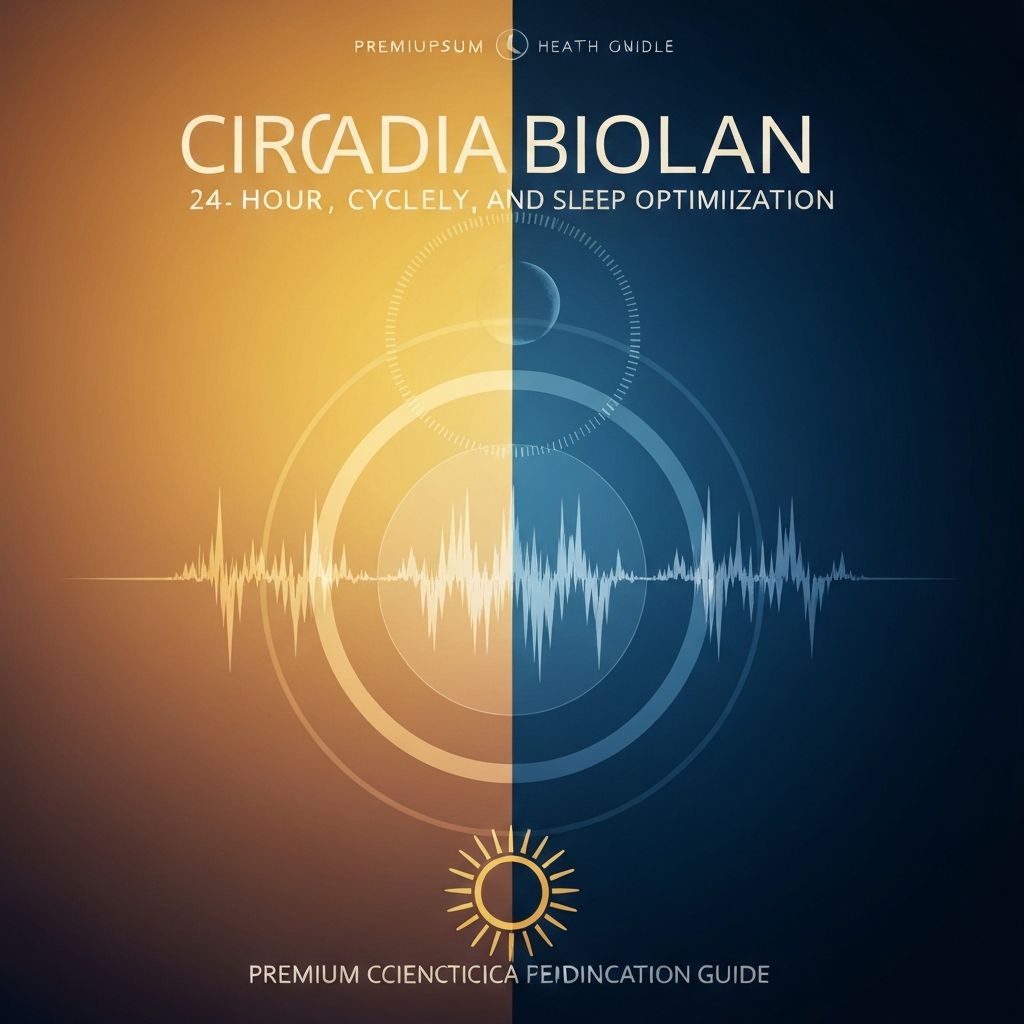
The Rhythm of Life: A Comprehensive Guide to Circadian Biology and Sleep Optimization
In our modern, hyper-connected world, we have largely severed our ancestral link to the natural cycles of light and dark. We live in a 24/7 society illuminated by artificial light, sustained by caffeine, and driven by digital demands. However, deep within our biology lies an ancient timing mechanism—the circadian rhythm—that governs nearly every physiological process in our bodies. Understanding and optimizing this internal clock is not just about feeling less tired; it is about unlocking the foundational blueprint for longevity, mental clarity, and metabolic health.
What is Circadian Biology?
Circadian rhythms are physical, mental, and behavioral changes that follow a 24-hour cycle. These natural processes respond primarily to light and dark in an organism's environment. The term 'circadian' comes from the Latin words 'circa' (about) and 'diem' (a day). While these rhythms are endogenous—meaning they are self-sustained within our cells—they are synchronized by external cues known as 'zeitgebers' (time-givers), with light being the most powerful of all.
At the helm of this system is the Suprachiasmatic Nucleus (SCN), a tiny region in the brain's hypothalamus containing approximately 20,000 neurons. The SCN acts as the master clock, receiving direct input from the eyes via the retinohypothalamic tract. When light hits specialized cells in the retina, signals are sent to the SCN, which then orchestrates a symphony of hormonal and physiological responses across the entire body. From body temperature and immune function to the release of cortisol and melatonin, the SCN ensures that every organ system knows what time it is and what it should be doing.
The Dance of Melatonin and Cortisol
To understand sleep optimization, we must understand the relationship between two primary hormones: cortisol and melatonin. Think of them as the 'gas' and 'brake' of your daily energy cycle.
Cortisol is often maligned as the 'stress hormone,' but it is essential for wakefulness and alertness. In a healthy circadian rhythm, cortisol levels should spike shortly after waking—a phenomenon known as the Cortisol Awakening Response (CAR). This spike provides the energy needed to start the day and triggers the 'countdown' for the rest of your daily cycle. As the day progresses, cortisol levels should gradually decline, reaching their lowest point around midnight.
Melatonin, conversely, is the hormone of darkness and repair. It is produced by the pineal gland in response to decreasing light levels. Melatonin doesn't actually 'knock you out' like a sedative; rather, it acts as a biological signal that it is time for the body to transition into its nocturnal state. Melatonin levels begin to rise in the evening, peak in the middle of the night, and drop precipitously toward dawn. When these two hormones are in balance, you experience effortless wakefulness during the day and deep, restorative sleep at night. When they are out of sync—due to late-night blue light exposure or irregular eating patterns—you experience the 'wired but tired' phenomenon.
The Four Stages of Sleep Architecture
Sleep is not a monolithic state of unconsciousness. Instead, it is composed of several distinct stages that repeat in 90-minute cycles. A healthy night of sleep typically involves four to six of these cycles.
- Stage N1 (Light Sleep): This is the transition between wakefulness and sleep. It usually lasts only a few minutes. Your heartbeat and breathing slow down, and your muscles begin to relax.
- Stage N2 (Decomposition): This stage makes up the largest portion of your total sleep time. Your body temperature drops, and brain wave activity slows. N2 is crucial for processing simple memories and motor skills.
- Stage N3 (Deep Sleep/Slow Wave Sleep): This is the most restorative stage of sleep. During N3, the body repairs tissues, builds bone and muscle, and strengthens the immune system. Crucially, this is when the glymphatic system clears metabolic waste (such as beta-amyloid) from the brain.
- REM (Rapid Eye Movement): First occurring about 90 minutes after falling asleep, REM is where most dreaming happens. Brain activity increases to levels near wakefulness. REM is essential for emotional regulation, complex problem-solving, and memory consolidation.
The composition of these cycles changes throughout the night. We get more Deep Sleep (Stage N3) in the first half of the night and significantly more REM sleep in the second half. This is why cutting sleep short by waking up too early often results in emotional volatility and 'brain fog'—you are literally depriving yourself of the REM cycles necessary for psychological processing.
Modern Disruptors: Why We are Out of Sync
Humanity has existed for hundreds of thousands of years under the reliable cycle of the sun. However, in the last 150 years—a mere blink in evolutionary time—we have introduced variables that confuse our ancient internal clocks.
Blue Light: The screens of our smartphones, laptops, and televisions emit high concentrations of blue light (wavelengths around 450-480 nanometers). This light is very similar to midday sunlight. When we look at screens at 11:00 PM, we are effectively telling our SCN that it is noon, which suppresses melatonin production for several hours.
Social Jetlag: This occurs when there is a significant discrepancy between our internal biological clock and our social obligations. Waking up at 6:00 AM during the week but sleeping in until 10:00 AM on weekends creates a 'jetlag' effect without ever leaving your time zone, leaving the body in a constant state of physiological confusion.
Late-Night Feeding: Our metabolism also follows a circadian rhythm. When we eat late at night, we introduce energy into the system at a time when the body is meant to be in repair mode. This can lead to insulin resistance, weight gain, and disrupted sleep quality as the body prioritizes digestion over deep-stage repair.
The Morning Protocol: Anchor Your Clock
Optimization starts the moment you open your eyes. To anchor your circadian rhythm, you must send a clear signal to your SCN that the day has begun. The most effective tool for this is viewing natural sunlight.
- View Sunlight within 30-60 Minutes of Waking: Step outside. You don't need to look directly at the sun, but you need photon exposure. On a clear day, 5-10 minutes is sufficient; on a cloudy day, aim for 20-30 minutes. This triggers the CAR and sets the timer for melatonin production later that night.
- Delay Caffeine: Try to wait 90-120 minutes after waking before your first cup of coffee. This allows the molecule adenosine (which builds up while you are awake to make you sleepy) to be naturally cleared from your system, preventing the 'afternoon crash.'
- Movement: Even a brisk 5-minute walk increases core body temperature, which is a secondary signal to your internal clock that it is time to be active.
- Cold Exposure: A 1-2 minute cold shower in the morning triggers a release of adrenaline and dopamine, boosting mood and further reinforcing the 'wake' signal to the brain.
The Evening Protocol: Facilitate the Descent
As the sun sets, your environment should reflect the transition. Your goal is to minimize stimulation and allow melatonin to rise naturally.
- Dim the Lights: Two to three hours before bed, switch off overhead lights. Use floor lamps with warm, amber bulbs. Red light does not suppress melatonin, making it the ideal choice for evening illumination.
- Digital Sunset: Put your devices away at least 60 minutes before sleep. If you must use them, utilize blue-light blocking glasses or 'night shift' modes, though physical distance from the device is always superior.
- The Caffeine Cutoff: Caffeine has a half-life of about 5-6 hours. This means if you have a coffee at 4:00 PM, half of it is still in your system at 10:00 PM. Aim to stop caffeine intake by noon or 2:00 PM at the latest.
- Cool Your Environment: Your core body temperature needs to drop by about 1-3 degrees Fahrenheit to initiate sleep. Keep your bedroom cool (around 18°C or 65°F) and consider a warm bath before bed; the rebound cooling effect after stepping out of the bath facilitates sleep onset.
Nutrition and the Circadian Rhythm
Our digestive organs have their own peripheral clocks. To optimize wellness, we should align our eating patterns with our activity levels. This is often referred to as 'Time-Restricted Feeding' (TRF). Aim to eat all your meals within an 8-12 hour window. Crucially, try to finish your last meal at least 3 hours before sleep. This prevents the 'metabolic noise' of digestion from interfering with the deep-sleep repair processes. High-protein breakfasts can also help stabilize blood sugar throughout the day, preventing the energy dips that often lead to poor sleep hygiene choices later in the evening.
Supplements for Sleep Optimization
While behavioral changes are the most important, certain supplements can assist in the transition to sleep. It is always best to consult with a healthcare professional before starting a new regimen.
- Magnesium (Glycinate or Threonate): Magnesium is a mineral that supports over 300 enzymatic reactions in the body. It helps relax muscles and activates the parasympathetic nervous system.
- Theanine: An amino acid found in tea that promotes relaxation without sedation, helping to quiet the 'racing mind' before bed.
- Apigenin: Found in chamomile, this compound has mild sedative effects that can improve sleep quality.
- Note on Melatonin Supplements: High-dose melatonin can suppress the body's natural production and disrupt other hormonal systems. If used, it should be kept to low doses (0.3mg to 1mg) and used primarily for overcoming jetlag.
The Long-Term Impact of Optimization
When you align your life with your circadian biology, the benefits extend far beyond just feeling refreshed. Chronically disrupted sleep and circadian rhythms are linked to increased risks of cardiovascular disease, Type 2 diabetes, obesity, and cognitive decline. By prioritizing sleep, you are facilitating the nightly clearance of neurotoxins, supporting your immune system's 'natural killer' cells, and ensuring that your metabolic health remains robust. Sleep is not a luxury; it is the fundamental price of admission for a high-functioning, healthy life.
Sleep is the single most effective thing we can do to reset our brain and body health each day—Mother Nature's best effort yet at contra-death.
Conclusion
Mastering your circadian rhythm is a journey of small, consistent choices. It is about respecting the biological machinery that has evolved over millions of years. Start by getting 10 minutes of sunlight tomorrow morning. Notice how your energy levels change in the afternoon. Notice how much easier it is to drift off at night. By reclaiming your rhythm, you are not just optimizing your sleep—you are reclaiming your life. The sun rises every day, offering you a new opportunity to sync with the world and unlock your highest potential. Embrace the light, respect the dark, and let your biology do the rest.
As you continue on your wellness journey, remember that perfection is not the goal. Life happens—late dinners, travel, and stress are inevitable. The goal is to build a resilient foundation so that when life does throw you off rhythm, you have the protocols in place to find your way back to center. Your body wants to be in sync; you simply need to provide the right environment for it to happen.