The Master Key: An In-Depth Journey Through the 78 Doors of Tarot
To hold a Tarot deck is to hold a mirror to the human soul. Often dismissed as mere fortune-telling, Tarot is actually an intricate psychological and spiritual tool that utilizes the language of archetypes to bridge the gap between the conscious and the subconscious mind. Whether you are a total novice or a seasoned practitioner, understanding the depth of these 78 cards requires a journey into history, symbolism, and your own inner landscape.
The Evolution of the Arcana
The origins of Tarot are shrouded in as much mystery as the cards themselves. While some legends link them to ancient Egypt or the mystical teachings of the Kabbalah, historians generally trace the physical cards back to 15th-century northern Italy. Originally known as 'trionfi' (triumphs) and later 'tarocchini', these decks were first used for parlor games among the aristocracy. It wasn't until the late 18th century that occultists in France and England began to see deeper esoteric meanings within the imagery.
By the early 20th century, the publication of the Rider-Waite-Smith deck—illustrated by Pamela Colman Smith under the direction of Arthur Edward Waite—revolutionized the practice. It was one of the first decks to feature detailed pictorial illustrations for the Minor Arcana, making the cards accessible to a wider audience. Today, we view Tarot as a 'living' system that continues to evolve, reflecting contemporary shifts in culture and psychology while remaining rooted in universal human experiences.
The Architecture of the Deck
A standard Tarot deck is divided into two distinct parts: the Major Arcana and the Minor Arcana. Understanding the interplay between these two is essential for a balanced reading. The Major Arcana represents the 'macro'—the big, life-altering events and spiritual lessons. The Minor Arcana represents the 'micro'—the day-to-day happenings, emotional ebbs and flows, and practical matters.
The Major Arcana: The Fool’s Journey
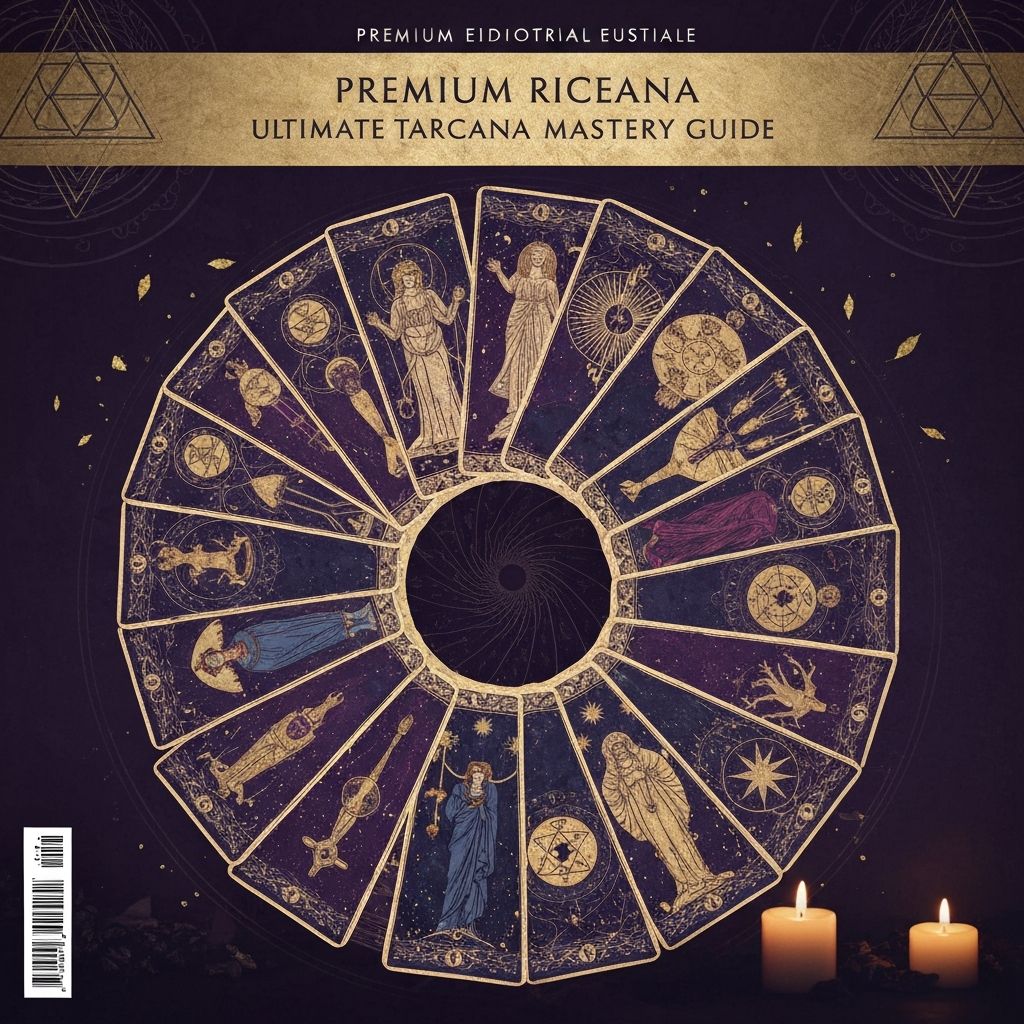
Consisting of 22 cards numbered from 0 to 21, the Major Arcana tells a story known as 'The Fool’s Journey.' It begins with The Fool (0), representing the soul in its purest, most innocent state, and ends with The World (21), representing total integration and completion. When these cards appear in a reading, they signal that a significant karmic lesson or a major life transition is underway.
Each card in this sequence is an archetype. The Magician represents the power of will and manifestation; The High Priestess symbolizes the call of the intuition; The Tower represents the sudden, necessary destruction of false structures; and The Star offers the hope and healing that follows. To study the Major Arcana is to study the universal cycle of birth, death, and rebirth that defines every human life.
The Minor Arcana: The Four Suits of Existence
The remaining 56 cards are the Minor Arcana, divided into four suits that correspond to the four classical elements. These suits provide the context for our daily struggles and triumphs:
- Wands (Fire): Passion, creativity, ambition, and the spark of inspiration. Wands deal with our drive and the 'will' to do.
- Cups (Water): Emotions, relationships, intuition, and the subconscious. Cups deal with our capacity to love and connect.
- Swords (Air): Logic, communication, conflict, and the power of the mind. Swords represent our intellectual challenges and the double-edged sword of truth.
- Pentacles (Earth): Material wealth, physical health, career, and manifestation. Pentacles represent the grounded, practical reality of living in the physical world.
Decoding the Language of Symbolism
Reading Tarot is less about memorizing definitions and more about learning to see. Every color, animal, gesture, and landscape in a card carries weight. For example, a yellow background often signifies mental clarity and solar energy, while a calm sea in the distance might suggest emotional stability. When you look at a card like the Three of Swords, the imagery of a heart pierced by three blades is visceral; you don't need a book to tell you it represents heartbreak or mental anguish.
However, as you go deeper, you begin to notice the nuances. Is the figure in the card looking to the left (the past) or the right (the future)? Are they standing on solid ground or near water? This visual language allows the reader to synthesize multiple meanings into a cohesive narrative. It is the art of storytelling where the cards are the characters and the spread is the plot.
The Role of the Court Cards
The Court Cards—Kings, Queens, Knights, and Pages—are often the most difficult for beginners to interpret. They frequently represent people in our lives, but they can also represent different facets of our own personalities or the 'energy' we need to adopt in a given situation.
The Pages are the messengers, representing the student or the initial spark of an idea. The Knights are the men of action, representing movement and often the extremes of their suit. The Queens represent internal mastery and nurturing, while the Kings represent external mastery and authority. If you pull the Queen of Swords, it might not mean a literal woman is coming into your life; it may mean you need to be direct, honest, and perhaps a little emotionally detached to solve your current problem.
Developing Your Intuition: Beyond the Guidebook
While guidebooks are helpful starting points, the true magic of Tarot happens when you trust your own 'inner sight.' Intuition is like a muscle that needs regular exercise. A common exercise for beginners is the 'Daily Pull': every morning, draw one card and sit with it. Don't look up the meaning immediately. Instead, describe what you see, how it makes you feel, and what it might be trying to tell you about the day ahead.
At the end of the day, revisit the card. How did that energy manifest? This feedback loop builds a personal relationship with the deck. Over time, you’ll find that a card like The Moon might mean 'deception' in a book, but for you, it consistently appears when you’re about to have a vivid dream or a creative breakthrough. This personalized vocabulary is what makes a reader truly gifted.
The Ethics and Responsibility of Reading
Tarot is a powerful tool, and with power comes responsibility. As a reader, you are holding space for someone else's vulnerability. It is crucial to remember that the cards show probabilities, not fixed destinies. The future is always in flux, influenced by the free will of the individuals involved.
A responsible reading should empower the querent (the person asking the question). Instead of telling someone, 'You will get this job,' a more helpful interpretation might be, 'The energy of the Eight of Pentacles suggests that your hard work is being recognized, and if you continue to focus on your craftsmanship, success is likely.' This keeps the power in the hands of the person, rather than surrendering it to 'fate.' Ethical reading also involves knowing when to refer someone to a professional—be it a therapist, a doctor, or a financial advisor—as Tarot is a supplement to, not a replacement for, professional guidance.
How to Conduct a Reading
Performing a reading is a ritual that signals to your mind that you are entering a sacred space. Here is a simple framework for a successful session:
- Clearing the Space: Many readers use sage, palo santo, or sound (like a singing bowl) to clear the energy. Simply taking three deep breaths can also suffice.
- The Question: Formulate your question clearly. Open-ended questions (starting with 'How' or 'What') are generally more productive than 'Yes/No' questions.
- Shuffling: There is no right way to shuffle. Some people cut the deck into three piles, while others 'wash' the cards in a messy pile on the table. Do what feels natural.
- Choosing the Spread: For beginners, a Three-Card Spread (Past, Present, Future) is perfect. For more complex issues, the Celtic Cross is the gold standard.
- Synthesis: Look at the cards as a group. Do the colors harmonize? Are there multiple cards of the same suit? What is the 'vibe' of the spread before you even look at individual meanings?
Tarot does not change the future; it changes the person who is looking at the future. By gaining clarity on your current path, you gain the power to change your destination.
Conclusion: The Lifelong Study
The study of Tarot is a lifelong pursuit. You could spend decades with the same 78 cards and still discover a new detail or a hidden layer of meaning in your tenth year that you never noticed in your first. It is a companion for the journey of life, offering comfort during the dark nights of the soul and celebration during the moments of triumph.
As you move forward, remember that the cards are just paper and ink. The true power lies in the connection between the imagery and your own wisdom. Tarot is the master key, but you are the one who must walk through the door. Embrace the mystery, trust your gut, and let the cards tell the story of your incredible, unfolding life.